Tag Archives: endurance

Bodybuilding Looks at Running

So I got a call from Nick Collias, a writer for Bodybuilding.com a few weeks ago. He was reading Anatomy for Runners, and was impressed with the way that I stressed the importance of comprehensive athlete development. He asked a bunch of questions, and put together a very nice feature article called Strength Training for Runners, How to Do It Right that you can check out here.

Sure, some of the models in their stock photos can lift you and your entire running group while squatting, but don’t be put off. The insights of a group of folks who aren’t first foremost runners is pretty refreshing. I should note that some of the pics and videos in here aren’t mine, and a few are a bit different that the correct form…..I recommend referring to your copy of Anatomy for Runners for the correct form explanations and pics.

In addition to some very insightful Q & A from bodybuilding.com, I wrote a basic strength progression that I highly recommend checking out!

Merry Merry Everyone!

Christmas gifts for the athlete you love (or yourself!)

So we are officially past one of the coolest days ever (12-12-12) and now 11 days away from when the man in the red suit flops down your chimney to bring joy to all the good little boys and girls. Those of you much better than I are likely done your Christmas shopping. But if you are like me, and still haven’t picked out any presents for your wife (or other person you care about), I’d like to offer a few suggestions. If someone you love is looking for an edge, wants to improve their skills, and is looking to blow their inner athlete wide open – then look no further……

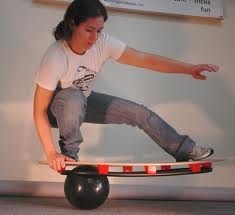
#1 – Rocker Board.
20121214-101308.jpgYou’ll notice a common theme here. All of the tools (toys) listed here are designed to help you improve balance and proprioception. These skills carry over in spades to all your athletic persuits: running, cycling, skiing, surfing, climbing, kiteboarding, football, basketball, tennis,  and possibly even bowling. Rocker boards are a great tool to teach you how to stabilize your foot and ankle. Hard unstable surfaces provide an optimal training environment to improve you. You should look for a board that only rocks in one direction (thus the name rocker board). Many folks also make boards that wobble and spin in all directions (called wobble boards). Both have their place, but when it comes to training the foot and lower leg, I’m a big fan of the former. These are sold in many places. If you are looking for suggestions, I typically direct people over to sportssmith.net because they have the cheapest one I’ve found: $29.99.

#2: Surfing in your living room – meet the Si-Board.

20121214-101324.jpgSo you’ve mastered basic balance skills, and are looking to quite possibly have as much fun as possible while under your roof? Look no further than the Si-Board. Sure the Indo Board is cool, but this thing is in a class by itself. I have one and absolutely love it. Its so much fun! Its not one of those things you’ll say “oh I have to make time to work on my balance……” Its so engaging that you may find yourself taking time away from other things! Your feet and hip stabilizers will get a workout like nothing else. They are pretty $$$$. I bought the DIY creator kit for cheap, and in 45 min was “surfing” in my living room.  In my mind, if you are an athlete, you should have one of these. Period.

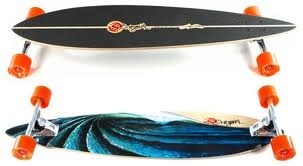
#3: Surfing down the pavement –> Longboard.

20121214-101339.jpgPresents are all about fun right? Buying a long board was one of the best decisions I made. Its not like hucking off the loading docks like we all did when we were 12. This is all about the flow. It’s great to carve slalom turns down the hill – almost as much fun as skiing or snowboarding. And once you learn to “pump it” you can fly. I can roll miles down the road without pushing at all. I guess some people might say its a great workout, but its so much fun I’d do it even if balance skills didn’t translate into other sports. What board to get? wow – there are hundreds of options out there. Personally, I’ve got a Original Pintail 40. I bought it because it has springs instead of bushings. This makes it easy to rail turns at low speed and a bit tougher to control at high speeds, but lets’ face it: Most of us aren’t looking to hit 50 mph down a mountain while slamming a RedBull.  Only warning I’d offer is this: you may find yourself longboarding more and doing your typical sport a bit less!

#4: a book? Maybe a book called Anatomy for Runners! Its by far the cheapest thing on this list, and quite possibly the most valuable. I’ve spent many years of my life teaching. I’ve taught at UVA and continue to teach around the US. You’ll be surprised what people are capable of when you give them the knowledge to succeed. That was the goal behind my book. Its a way to give you information to help you hit your goals this season and beyond. Sure its slanted towards runners, but about 80% of the information in there applies to other endurance and strength and power sports as well.

If you are looking at the equipment above and thinking “that’s a bit high level for me-  no way”……let’s put something out there. Blowing past your comfort zone is the only way you’ll ever make jumps to the next level in your performance. And yes, I’ve put “old folks” on these with tons of success. Sure you should be careful when you are learning, but I will caution you that liberal use of #2 and 3 above just might result in fun!

Disclaimer for the people who think I’m funding my retirement with these recommendations. I personally bought the Si-board starter kit and my Original Longboard (in fact I bought a second one too!), and my clinic purchased the rocker board form Sports Smith. These folks have no idea that I am writing this, and I’m getting absolutely nothing in return.

Well, with the legal mumbo jumbo out of the way, Happy Shopping, and Happy Holidaze!!!

And if you’d like to re-live a little Christmas story from last year, check out how Climate change is impacting reindeer training. 

How should your foot land when you run?

Foot strike: your cross country coach from 1972 told you to always roll through from heel to toe. the barefoot zealots tell us we should always land on the forefoot. And several other schools of though tell us something else: to land on our midfoot.

Measuring all this stuff in the biomechanics lab has taught me a lot. Foot strike is but one of many variables that are worth looking at, but not the only one worth looking at. Additionally, people often strike different than they think they do. Lastly, Pete Larson found that there isn’t much of a difference in foot strike patterns and running times.

Foot strike is more of an effect of many things related to your form, rather than the overiding factor that governs your form. And if you’d like to see more, check out what Pete Larson and I said to Competitor Magazine.

More free books on the east coast, from Two Rivers Treads

The good folks at Two Rivers Treads are stepping up to help you this holiday season, with a free copy of my book, Anatomy for Runners. So if you need a pair of shoes, why not help those who are making an effort to help you as well. Here’s their email below.

Community Runners,
My friend Jay Dicharry is considered by most in the running world to be THE guru on gait mechanics and running injuries. He spent the better part of 2 years writing a book “Anatomy for Runners”. Jay and I have collaborated on many projects and much of what I have discovered I have Jay to thank for.

So our gift to you is his book with any shoe purchase or 50 dollar gift certificate. This includes closeout or current models. This special extends while our book supply lasts….we have enough books to hopefully get us through the holidays.

Dr Mark Cucuzzella
Two Rivers Treads

I did your exercises, and now my pants don’t fit!

One of my former clients paid me a visit today for a check-up. While talking to him, he offered music to my ears.

“I did all those glut max exercises you told me about, and now my pants don’t fit!”

When muscles get stronger, the muscle fibers actually increase in size. Bigger muscle fibers can produce more force…..A positive thing for you as an athlete. This is a good way to “outgrow your clothes.”

Drinking too much egg nogg at your holiday party this week is a less preferable way to outgrow your clothes.

This video is only partially disturbing

Class in session! Upcoming Talks for Runners, Coaches, and Clinicians

20121129-171808.jpgOne of my favorite things is teaching. Sure I like the human body and what its capable of, but more importantly, I like the challenge of trying to teach average-Joe runner, their college coach, and their physicians and therapists. Each of these groups has a different education, different background, and different expectations, but they all want to learn to be better. Its my hope that I can offer some specific help to all of them.

I went to a class on teaching once, and learned a thing or 5000 about how we absorb and interpret information. To really enable someone to learn, you had to challenge the student to the point that their previous thought process is shattered. By poking holes in what we think, and replacing them with what we know, your and frame of understanding is shifted forever. Its my job to get you to think critically, so that you can think for yourself.

Since I get lots of people asking when my next talk is, I thought I’d share a few upcoming events in case folks were interested. Always good to cram more stuff in you brain.

Wed Dec 5th, 2013: The Running Event in Austin, TX – the annual conference for the Independent Running Retailer Association. Saucony is gracious enough to bring me in to discuss the mechanics of running. The more your local running retail staff knows about running the more they’ll be able to help you. I’ll also be doing book signings if anyone needs stocking stuffer.

Jan 20-21st, 2013: The Speed Summit in Morristown, NJ, an official USATF Level 3 Coaching Education Seminar. Want to save a few bucks? During checkout, type in “Dicharry” in the code box and you’ll save $10. Also if you print out the form and mail it in, you’ll also save an extra $9 dollar processing fee. I’ll be giving two talks: “How to prepare the body for optimal speed and strength training” and “How to screen for zebras in a field of horses.” But enough about me though….there are some major heavy hitters speaking. I’m really looking forward to this event.

Feb 23rd-24th, 2013: The Running Summit in Costa Mesa, CA, an official USATF Level 3 Coaching Education Seminar. And if you decide to attend, type in “Jay” in the code box during your checkout and you’ll save $10 dollars. An impressive weekend of discussion from some of the country’s most prominent coaches. As for me, I’ll be giving two talks: “Stretching, Strengthening, and Screening: Answers to questions to help your runners run” and “How shoes impact your form and how your form impact your shoes”

March 8-9th, 2013: The 10th Annual UVA Running Medicine Conference: From the Lab to the Clinic. This one really is near and dear to me. This started as a vision a decade ago when Founding-board members Dr. Robert Wilder, Eric Magrum, and myself came together to see what would happen if we had the first running-only medical education conference. Well, what began with 50 people mushroomed to over 240 of the most passionate running-specific healthcare providers in North America gathering to discuss better care for their patients. Its our 10th year! Thanks to all of you for your support over the years as we aim to give you the best experience possible. I’ll present “What to expect when you’re expecting: how clinical lab measures translate to gait.” But don’t come just for my talk! We’ve got a host of talented presenters, including the one and only Dr. Rodger Kram from CU-Boulder. Whenever I get some great brainwave creep into my head that I think is new, I’ll research it and sure enough, Dr Kram already found it out years ago. He’s brilliant and an amazing presenter that we are luck to have. And yes -there is a lab session yet again on Saturday and space is limited. Check out the link for full content.

April 19th and 20th: Care for the Injured Cyclist in Ann Arbor, MI. Yes, time to switch gears – literally. We’ll delve into the finer points of bike fit from both the performance and injury aspect, discuss how cycling contributes to chronic problems, and cover novel ways to improve on-the-bike stabilization and technique drills for efficiency. Don’t have the reg link for this one yet, but I’ll post it when I do.

Whew. that’s a lot for now. And somewhere in here, I need to fit in a ski trip!

Hope to see you in class.

Want a free copy of my book? School’s in session at a local running retailer.

There is a store called “Daddy Ultra Runs” down in Cocoa Beach, FL, and the owner, Hernan Garcia, is giving away my book with every shoe purchase from October through December…..at his own expense. Is this crazy? I don’t even know this guy. Why would a shop owner do something like this?

Let’s look at the reality here. 82% of runners sustain a running injury during their lifetime. Stats show that 42-62% of runners get hurt each and every year. Those numbers aren’t good! In fact some people would look at those numbers and say “running is dangerous – stay away!”

However, my experience treating runners daily for over a decade, and collecting objective information on their running stride in my lab has shown me that running isn’t really the problem. The problem has more to do with a) your body, or b) the way in which you run. While I spend my “day job” doing individual running assessments in my lab, I realize that I can’t see everyone, which is why I wrote the book, Anatomy for Runners. While its no substitute for a full one-on-one evaluation, its the best I can do until I’m able to successfully clone myself.

Let’s be honest, Your local running retailer is the first point of contact for runners. They see way more runners in a day than any local clinician does, and can take advantage of their exposure as educators. They can spread better information to both new and experienced runners, and together, we can work collectively to change those injury stats, and keep you running healthy into the future.

Thanks Hernan, and thanks to all of you who are spreading the word on the book!

Chevy Tahoe or a Mini Cooper? A tip on running shoe selection.

You are about to leave your house and have the keys to both your cars in your hand. Which do you take?

Today, you have to drive through town town to get some groceries, and then to the mall. Its a slow drive on neighborhood streets to the freeway. Your SUV is comfortable, affords a good view of the road, and has lots of room for the stuff you are going to buy. Given the fact that SUV’s account for huge number of sales in the US, the public agrees this is a logical choice.

OK – its the weekend. You are going to flee the city and head up to the cabin. Its a really twisty backcountry mountain road. Turn after turn, its hard to even maintain the posted speed limit. Do you select the SUV that ensures you need to slow down due to body roll, or do you take the sports car? The sports car is lighter, lower, and has a firmer suspension. It was designed for these very conditions. While a stiffer suspension may be less comfortable driving through the burbs, the improved “road feel” you get with the sports car helps you drive better at speed through more challenging roads.

Image

Time to go shoe shopping! You ask the salesman to pull two pairs of shoes for you. The first feels like a cloud at first step. It feels like you could stand around in them for hours. Your quick run test on the sidewalk in front the shop confirms that same cushy marshmallow feel during your run. Going back inside, you slip on shoe #2. It feels comfortable, but is much firmer. It didn’t grab you at first step as you walked around the store, but when you repeated your short demo run outside, it felt pretty much like the shoe wasn’t even there. The firmer feel felt a bit more responsive.

What running shoe should you buy?

Well, the marketing research is clear. People buy shoes b/c of 1) color, and 2) “first feel”. First feel is that first step you take. You know that sense of walking on a cloud…..the same feeling that made you think you could stand around in them for hours? Well, that doesn’t have anything to do with running shoe selection. Running is not standing. When you stand, you have half your body weight split between each foot. The total load on each each leg is about half your body weight. When you walk, sometimes you have two feet on the ground, and sometimes you have one foot down on the ground. So at the most, you’d have your full body weight on one leg, and at the least, it would be split between both legs. And when you are walking, your feet are on the ground for a long time. If you need to “micro-correct” your muscles to stabilize your body, you’ve got time to do so.

Running isn’t standing. And its not walking. During running, your foot is only on the ground for a very short time: The average runner moving at 7.2 mph is on the ground for only .17 seconds. Decisions on stability need to happen very very quickly, faster than you can actually think about them. And when running, there is no double leg contact. You are either sailing through the air, or in contact with a single leg. That single leg must not only support your full body weight, but about 2.5x’s your body weight.

Image

So what “car” do you pick? Well, lets look at hundreds of research articles on foot and ankle balance. Almost every single article says that you have a harder time balancing and stabilizing when on a cushioned surface. On marshmallow-cushy surfaces, the muscles that control your foot and ankle kick on too late and not enough to keep things under control. So if you are going to rally around a twisty mountain mountain road, the stiffer suspension on the Mini Cooper gives you better traction and feel. When running, a firmer feeling shoe provides a stiffer surface for the muscles in your foot and ankle to support your body. Said very simply: the foot works better when on a firmer surface.

So do yourself a favor. Go to the store. Try on your shoes. Obviously you’ll stand, and then walk outside or over to the treadmill. But resist the urge to make an impression on the shoe until you are actually running. Of course you should buy a pair that feels comfortable! But most of us are in shoes too soft and squishy to be running fast. Pick the right car for your drive, and the right shoe for your run. Running comfort, not walking comfort, should be key.

any pearls for the aging runner?

20120919-012247.jpg

Runner’s World asked for some key points to think about as we edge-up in years. It happens to all of us at some point right?

Check it out here

Disclaimer: the advice mentioned in this article is not meant to replace Botox

Do runners with a ball “get it” more than runners?

The media at large has done a dis-service to you, the consumer. They love polarizing images. They love the battle between overly built-up clodd-hopper motion control shoes vs. naked feet. They try to instantly declare one “better” than the other. The reality is that the barefooot buzz has been incredible for ALL athletes. No matter which side of this polarizing topic you stand on, it has directed attention on form. And that’s one of the main things really.

Let’s clear out the sewer lines folks. Barefoot is very DIFFERENT from running in shoes. Sure a good number of folks switch their contact style from rearfoot to forefoot when going barefoot, but a lot DON’T. And while the media loves to harp on this one single factor, its like saying only one tree in the entire forrest is important. And that’s just not true.

Its not so much forefooot vs rearfoot here, its more about where the foot is in relation to the body that counts. Striding too far in front of the body results in bad things. Your feet were meant to be beneath you – not flying out in front. Imagine running over ice. Anyone feel safe over-striding on ice? Didn’t think so……But its not just “runners” who are beginning to take notice. Other “running athletes” are asking question too.

Recently, I had a conversation with basketball journalist Steve McPherson. He was asking me about the apparent rise of injuries in basketball, and wanted to know if anything from all this barefoot hoopla translates over to the hoop. Steve did an excellent job with this piece, “What can the NBA learn from barefoot running?” I recommend you take a look, whether you run with barefeet, wrapped feet, or a ball.

20120531-174049.jpg