Tag Archives: Anatomy for Runners

Looking ahead to 2013

20130102-135706.jpgSo it’s the New Year. As a reader, you’ve seen every blog out there flaunt their “top posts for 2012!”   Well, since there are less than 50 posts on this blog, making a “top 10 posts” post is a little ridiculous.

For writers, wordpress sends us these snazzy year end reports to see how you are fairing in the e-world. And one thing is interesting in my summary. While the reader base is still growing, the most popular posts on this blog aren’t new. In fact some of the most popular content on here is from last year. This means that people are coming to this site as a reference for quality information. Or it could mean that the “tight pants” video I linked from Jimmy Fallon turned everyone off…..

In any case, I’m not going to discuss the past, because there’s a search engine for that. But looking forward, what’s planned for 2013? More help for you.

  • Expanded Focus on Athletic skill: My book has been embraced by runners, but its also been embraced by non-runners. Every athlete needs to know how to keep their chassis in tune as they train their engine. Well rounded athletes recover faster from training stress, better prevent injury, and slow the effects of aging on your body. Better foundation = better performance. And a lot of it is just plain fun!
  • More content on other sports: Guess what? No one knows everything. Looking at other sports can help you learn more about other training strategies and tricks that may help you. And if you are a cyclist or swimmer, you’re really going to be happy looking forward. And we are even going to discuss weights, strength, speed, and power. We are going to make you better.
  • Current information: I’m speaking at 10 different conferences between now and August. I believe that knowledge shouldn’t stay in the hands of the teacher. I’ll be looking to post relevant new findings being spread around the conference circuit to help us all enrich our exchange of information.

Video: A word is a word. A picture is apparently worth a thousand. Well, sometimes words and pictures still aren;t worth as much as seeing something in realtime. Expect to see more video content on here.

So it’s the New Year. As a reader, you’ve seen every blog out there flaunt their “top posts for 2012!” Well, since there are less than 50 posts on this blog, making a “top 10 posts” post is a little ridiculous. But wordpress sends out these snazzy year end reports to authors letting them know how they are doing. And one thing is interesting in my summary. The most popular posts on this blog aren’t new. In fact some of the most popular content on here is from last year. This means that people are coming to this site as a reference for quality information. Or it could mean that the “tight pants” video I linked from Jimmy Fallon recently turned everyone off…..

In any case, I’m not going to discuss the past, because there’s a search engine for that. But looking forward, what’s planned for 2013? More help for you.

  • Expanded Focus on Athletic skill: My book has been embraced by runners, but its also been embraced by non-runners. Every athlete needs to know how to keep their chassis in tune as they train their engine. Well rounded athletes recover faster from training stress, better prevent injury, and slow the effects of aging on your body. Better foundation = better performance. And a lot of it is just plain fun!
  • More content on other sports: Guess what? No one knows everything. Looking at other sports can help you learn more about other training strategies and tricks that may help you. And if you are a cyclist or swimmer, you’re really going to be happy looking forward. We are even going to discuss weights, strength, speed, and power. We are going to make you better.
  • Current information: I’m speaking at 10 different conferences between now and August. I believe that knowledge shouldn’t stay in the hands of the teacher. I’ll be looking to post relevant new findings being spread around the conference circuit to help us all enrich our exchange of information.
  • Video: A word is a word. A picture is apparently worth a thousand. Well, sometimes words and pictures still aren;t worth as much as seeing something in realtime. Expect to see more video content on here. Warning: hair and make-up budget is zero dollars.

Here’s to getting out of your rut, and exploring your world – Happy New Year!!!

Runner’s World likes Anatomy for Runners…. now on Kindle

Call me a retro grouch. I got my first cell phone (kicking and screaming) in 2011. And I like having a book in hand to fold pages, highlight, and scribble. But I’m not the majority. People have been asking for the Kindle version, and its now live. And if you are nostalgic like me, the print version is still there as well.

And if you’d like to see what others are saying, Eliz@beth Maiuolo, a blogger for Runner’s World had a nice review of the book here.


Bodybuilding Looks at Running

So I got a call from Nick Collias, a writer for Bodybuilding.com a few weeks ago. He was reading Anatomy for Runners, and was impressed with the way that I stressed the importance of comprehensive athlete development. He asked a bunch of questions, and put together a very nice feature article called Strength Training for Runners, How to Do It Right that you can check out here.

Sure, some of the models in their stock photos can lift you and your entire running group while squatting, but don’t be put off. The insights of a group of folks who aren’t first foremost runners is pretty refreshing. I should note that some of the pics and videos in here aren’t mine, and a few are a bit different that the correct form…..I recommend referring to your copy of Anatomy for Runners for the correct form explanations and pics.

In addition to some very insightful Q & A from bodybuilding.com, I wrote a basic strength progression that I highly recommend checking out!

Merry Merry Everyone!

Christmas gifts for the athlete you love (or yourself!)

So we are officially past one of the coolest days ever (12-12-12) and now 11 days away from when the man in the red suit flops down your chimney to bring joy to all the good little boys and girls. Those of you much better than I are likely done your Christmas shopping. But if you are like me, and still haven’t picked out any presents for your wife (or other person you care about), I’d like to offer a few suggestions. If someone you love is looking for an edge, wants to improve their skills, and is looking to blow their inner athlete wide open – then look no further……

#1 – Rocker Board.
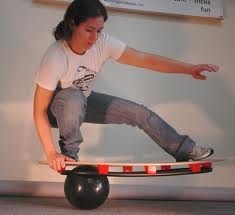
20121214-101308.jpgYou’ll notice a common theme here. All of the tools (toys) listed here are designed to help you improve balance and proprioception. These skills carry over in spades to all your athletic persuits: running, cycling, skiing, surfing, climbing, kiteboarding, football, basketball, tennis,  and possibly even bowling. Rocker boards are a great tool to teach you how to stabilize your foot and ankle. Hard unstable surfaces provide an optimal training environment to improve you. You should look for a board that only rocks in one direction (thus the name rocker board). Many folks also make boards that wobble and spin in all directions (called wobble boards). Both have their place, but when it comes to training the foot and lower leg, I’m a big fan of the former. These are sold in many places. If you are looking for suggestions, I typically direct people over to sportssmith.net because they have the cheapest one I’ve found: $29.99.

#2: Surfing in your living room – meet the Si-Board.

20121214-101324.jpgSo you’ve mastered basic balance skills, and are looking to quite possibly have as much fun as possible while under your roof? Look no further than the Si-Board. Sure the Indo Board is cool, but this thing is in a class by itself. I have one and absolutely love it. Its so much fun! Its not one of those things you’ll say “oh I have to make time to work on my balance……” Its so engaging that you may find yourself taking time away from other things! Your feet and hip stabilizers will get a workout like nothing else. They are pretty $$$$. I bought the DIY creator kit for cheap, and in 45 min was “surfing” in my living room.  In my mind, if you are an athlete, you should have one of these. Period.

#3: Surfing down the pavement –> Longboard.

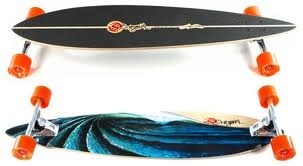
20121214-101339.jpgPresents are all about fun right? Buying a long board was one of the best decisions I made. Its not like hucking off the loading docks like we all did when we were 12. This is all about the flow. It’s great to carve slalom turns down the hill – almost as much fun as skiing or snowboarding. And once you learn to “pump it” you can fly. I can roll miles down the road without pushing at all. I guess some people might say its a great workout, but its so much fun I’d do it even if balance skills didn’t translate into other sports. What board to get? wow – there are hundreds of options out there. Personally, I’ve got a Original Pintail 40. I bought it because it has springs instead of bushings. This makes it easy to rail turns at low speed and a bit tougher to control at high speeds, but lets’ face it: Most of us aren’t looking to hit 50 mph down a mountain while slamming a RedBull.  Only warning I’d offer is this: you may find yourself longboarding more and doing your typical sport a bit less!

#4: a book? Maybe a book called Anatomy for Runners! Its by far the cheapest thing on this list, and quite possibly the most valuable. I’ve spent many years of my life teaching. I’ve taught at UVA and continue to teach around the US. You’ll be surprised what people are capable of when you give them the knowledge to succeed. That was the goal behind my book. Its a way to give you information to help you hit your goals this season and beyond. Sure its slanted towards runners, but about 80% of the information in there applies to other endurance and strength and power sports as well.

If you are looking at the equipment above and thinking “that’s a bit high level for me-  no way”……let’s put something out there. Blowing past your comfort zone is the only way you’ll ever make jumps to the next level in your performance. And yes, I’ve put “old folks” on these with tons of success. Sure you should be careful when you are learning, but I will caution you that liberal use of #2 and 3 above just might result in fun!

Disclaimer for the people who think I’m funding my retirement with these recommendations. I personally bought the Si-board starter kit and my Original Longboard (in fact I bought a second one too!), and my clinic purchased the rocker board form Sports Smith. These folks have no idea that I am writing this, and I’m getting absolutely nothing in return.

Well, with the legal mumbo jumbo out of the way, Happy Shopping, and Happy Holidaze!!!

And if you’d like to re-live a little Christmas story from last year, check out how Climate change is impacting reindeer training. 

More free books on the east coast, from Two Rivers Treads

The good folks at Two Rivers Treads are stepping up to help you this holiday season, with a free copy of my book, Anatomy for Runners. So if you need a pair of shoes, why not help those who are making an effort to help you as well. Here’s their email below.

Community Runners,
My friend Jay Dicharry is considered by most in the running world to be THE guru on gait mechanics and running injuries. He spent the better part of 2 years writing a book “Anatomy for Runners”. Jay and I have collaborated on many projects and much of what I have discovered I have Jay to thank for.

So our gift to you is his book with any shoe purchase or 50 dollar gift certificate. This includes closeout or current models. This special extends while our book supply lasts….we have enough books to hopefully get us through the holidays.

Dr Mark Cucuzzella
Two Rivers Treads

I did your exercises, and now my pants don’t fit!

One of my former clients paid me a visit today for a check-up. While talking to him, he offered music to my ears.

“I did all those glut max exercises you told me about, and now my pants don’t fit!”

When muscles get stronger, the muscle fibers actually increase in size. Bigger muscle fibers can produce more force…..A positive thing for you as an athlete. This is a good way to “outgrow your clothes.”

Drinking too much egg nogg at your holiday party this week is a less preferable way to outgrow your clothes.

This video is only partially disturbing

Want a free copy of my book? School’s in session at a local running retailer.

There is a store called “Daddy Ultra Runs” down in Cocoa Beach, FL, and the owner, Hernan Garcia, is giving away my book with every shoe purchase from October through December…..at his own expense. Is this crazy? I don’t even know this guy. Why would a shop owner do something like this?

Let’s look at the reality here. 82% of runners sustain a running injury during their lifetime. Stats show that 42-62% of runners get hurt each and every year. Those numbers aren’t good! In fact some people would look at those numbers and say “running is dangerous – stay away!”

However, my experience treating runners daily for over a decade, and collecting objective information on their running stride in my lab has shown me that running isn’t really the problem. The problem has more to do with a) your body, or b) the way in which you run. While I spend my “day job” doing individual running assessments in my lab, I realize that I can’t see everyone, which is why I wrote the book, Anatomy for Runners. While its no substitute for a full one-on-one evaluation, its the best I can do until I’m able to successfully clone myself.

Let’s be honest, Your local running retailer is the first point of contact for runners. They see way more runners in a day than any local clinician does, and can take advantage of their exposure as educators. They can spread better information to both new and experienced runners, and together, we can work collectively to change those injury stats, and keep you running healthy into the future.

Thanks Hernan, and thanks to all of you who are spreading the word on the book!

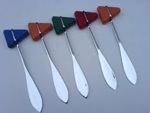
20121001-155217.jpgOK – you go to your doc or therapist. He/she gets a funny orange triangle thing (reflex hammer) and gently taps just below your knee. Instantly, you kick out your leg. You get a look of approval, and your doc moves onto to the next thing….. what just happened here? And what does this have to do with running surfaces I spoke of during my UROC video last week?

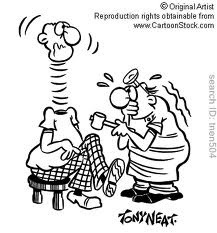
Your doc is testing your reflexes: an involuntary and nearly instantaneous movement in response to a stimulus. By nature, a reflex is not something you need to “think about” – it doesn’t require any processing in your brain. Basically, your body gets a signal (input), and it produces some type of response (output). So this very simple action of a tiny tap below your knee cap produces a contraction in your quad without your brain telling your quad to contract. Pretty useless right? Wrong.

Reflexes allow us to look at your neuromuscular system. The term “Neuromuscular system” is basically a fancy word to explain something very simple: muscles can’t do anything unless your nerves tell them to. Testing your reflexes let us see if the nerves are transmitting the right signals throughout your body. We know the INPUT is good because we both saw someone whack your knee. What we hope to see is the “right” amount of muscle contraction or OUTPUT. Poor output, such as too little contraction (called “low tone” or hypotonic) or too much contraction (hypertonic) is a sign that the neuromuscular system has a glitch. Little glitches means the system is unstable and produces less than optimal muscle contraction. The reasons for these glitches are a bit outside this blog post! Fortunately, most people will fall into the “normal range.” Performance in this “normal range” is a sign that the nerves do a good job of relaying information throughout your body, and that your muscles produce the “right” amount of contraction. These “smooth” reflexes mean your body has developed a very refined or organized way of moving when its given an input. OK – why are we wasting your time with this little lesson? Gait is pretty much a reflex.

Sure, you can make a conscious decision to walk or run backwards, or skip every third step if you want to. But for the most part, you don’t THINK about taking each and every step when walking and running. It happens sub-consciously at a fancy place in your nervous system called a “central pattern generator.” Over time you’ve learned to fine tune and coordinate this reflex. And spending time concentrating on your running form helps fine-tune this reflex pattern. Ever heard the term perfect practice makes perfect?

Interestingly, when we sprain ligaments, we tear nerves. I explain all this much more in my book, but the key aspect is: torn nerves = less input. Less INPUT = poor muscle control or OUTPUT. What do we do? In therapy we work to improve the INPUT to our body by doing lots of proprioception and balance training so we can get a better OUTPUT. You learn to refine your control, and develop alternate strategies to control your body. Do these gains translate over to running? Yes they do. You can improve your stability after an injury. But you know translates really well to running? Running….on different surfaces!

If you always give the exact same input, you’ll always get the exact same output. If you always run on a treadmill, at the exact same speed, and you never get tired, this strategy works pretty well. Except that isn’t the real world. Your body needs to know HOW to respond when you get a different INPUT. You run up hill, down hill, get tired, change your body weight from day to day, and encounter different surfaces. All these slight differences require slight changes in your technique.

Research shows similar trends for both walking and running gait. When things are always the same, you are more likely to get an injury. When things are out of control you are also more likely to get an injury. But people who have a range of comfortable walking and running patterns have multiple strategies to tap into.

So what’s the take home message here? If you give your body the same INPUT every time, you’ll always get the same response. If you expose your body to different surfaces, you learn to refine your reflexes to produce good quality muscle control on multiple surfaces, and improve control on your typical surface. The trail runners reading this already know, and can FEEL, these differences. However those of you who are stuck on the ribbon of asphault, its time to mix it up. Train on concrete. Train on asphault. And grass. And trail. And uphill. And if it feels weird, its sign that you need to do a bit more of it. Not all at once, maybe just a little bit in small doses. If you can’t take a 4 mile trail home, then maybe run the gravel alley. Jump onto the median and run in the grass for a bit. Exposure to varied surfaces can help you develop as a better runner.

Different input = smoother reflexes

Smoother reflexes = better muscle control

Better muscles control = better runners.


20121001-155822.jpg