Category Archives: cycling

I did your exercises, and now my pants don’t fit!

One of my former clients paid me a visit today for a check-up. While talking to him, he offered music to my ears.

“I did all those glut max exercises you told me about, and now my pants don’t fit!”

When muscles get stronger, the muscle fibers actually increase in size. Bigger muscle fibers can produce more force…..A positive thing for you as an athlete. This is a good way to “outgrow your clothes.”

Drinking too much egg nogg at your holiday party this week is a less preferable way to outgrow your clothes.

This video is only partially disturbing

Class in session! Upcoming Talks for Runners, Coaches, and Clinicians

20121129-171808.jpgOne of my favorite things is teaching. Sure I like the human body and what its capable of, but more importantly, I like the challenge of trying to teach average-Joe runner, their college coach, and their physicians and therapists. Each of these groups has a different education, different background, and different expectations, but they all want to learn to be better. Its my hope that I can offer some specific help to all of them.

I went to a class on teaching once, and learned a thing or 5000 about how we absorb and interpret information. To really enable someone to learn, you had to challenge the student to the point that their previous thought process is shattered. By poking holes in what we think, and replacing them with what we know, your and frame of understanding is shifted forever. Its my job to get you to think critically, so that you can think for yourself.

Since I get lots of people asking when my next talk is, I thought I’d share a few upcoming events in case folks were interested. Always good to cram more stuff in you brain.

Wed Dec 5th, 2013: The Running Event in Austin, TX – the annual conference for the Independent Running Retailer Association. Saucony is gracious enough to bring me in to discuss the mechanics of running. The more your local running retail staff knows about running the more they’ll be able to help you. I’ll also be doing book signings if anyone needs stocking stuffer.

Jan 20-21st, 2013: The Speed Summit in Morristown, NJ, an official USATF Level 3 Coaching Education Seminar. Want to save a few bucks? During checkout, type in “Dicharry” in the code box and you’ll save $10. Also if you print out the form and mail it in, you’ll also save an extra $9 dollar processing fee. I’ll be giving two talks: “How to prepare the body for optimal speed and strength training” and “How to screen for zebras in a field of horses.” But enough about me though….there are some major heavy hitters speaking. I’m really looking forward to this event.

Feb 23rd-24th, 2013: The Running Summit in Costa Mesa, CA, an official USATF Level 3 Coaching Education Seminar. And if you decide to attend, type in “Jay” in the code box during your checkout and you’ll save $10 dollars. An impressive weekend of discussion from some of the country’s most prominent coaches. As for me, I’ll be giving two talks: “Stretching, Strengthening, and Screening: Answers to questions to help your runners run” and “How shoes impact your form and how your form impact your shoes”

March 8-9th, 2013: The 10th Annual UVA Running Medicine Conference: From the Lab to the Clinic. This one really is near and dear to me. This started as a vision a decade ago when Founding-board members Dr. Robert Wilder, Eric Magrum, and myself came together to see what would happen if we had the first running-only medical education conference. Well, what began with 50 people mushroomed to over 240 of the most passionate running-specific healthcare providers in North America gathering to discuss better care for their patients. Its our 10th year! Thanks to all of you for your support over the years as we aim to give you the best experience possible. I’ll present “What to expect when you’re expecting: how clinical lab measures translate to gait.” But don’t come just for my talk! We’ve got a host of talented presenters, including the one and only Dr. Rodger Kram from CU-Boulder. Whenever I get some great brainwave creep into my head that I think is new, I’ll research it and sure enough, Dr Kram already found it out years ago. He’s brilliant and an amazing presenter that we are luck to have. And yes -there is a lab session yet again on Saturday and space is limited. Check out the link for full content.

April 19th and 20th: Care for the Injured Cyclist in Ann Arbor, MI. Yes, time to switch gears – literally. We’ll delve into the finer points of bike fit from both the performance and injury aspect, discuss how cycling contributes to chronic problems, and cover novel ways to improve on-the-bike stabilization and technique drills for efficiency. Don’t have the reg link for this one yet, but I’ll post it when I do.

Whew. that’s a lot for now. And somewhere in here, I need to fit in a ski trip!

Hope to see you in class.

DOPESTRONG: Don’t hate the player, hate the game.

The blog began to help YOU. Today, we are going on a small tangent, to help US. Unless you’ve been vacationing on a deserted island, you’ve likely heard news that’s gotten more coverage than the debates: Lance cheated. DOPESTRONG is born. Unless you believe in the tooth fairy, you likely didn’t get any news you weren’t expecting. In fact, who really cares. These are AMAZING atheltes, who train VERY hard. And the drugs they took allowed them to go “X”% faster. So what? I think its safe to say that the entire peleton was doping as well. The playing field was essentially level. You still got to see a good race. The race you were hoping for. In fact, while we are at it, let’s go ahead and encourage the use of performance enhancing drugs. In the spirit of competition, let’s ensure everyone has access to anything and everything they need to succeed at all costs. Who cares if some of them die along the way due to side effects, as long as we all see a good show. In fact, maybe it would make things more fair if we just had the all drug olympics. (so worth watching this!)

Let’s take a step back. its not fair for anyone to point fingers at Lance until we have a little chat. Lance didn’t cheat by himself, neither did the other cyclists who recently came forward as part of the USADA investigation. Neither did all the other cyclists, runners, baseball players, football players, swimmers, etc who have gotten busted for banned substances. They had motivation, and help to stay on their chosen path: cheating.

20121013-225147.jpgMy cousin, and former elite cyclist, wrote an excellent perspective on this: “Lance is rich, but Phil Knight is richer.” Let’s be clear here. We’ve created a society where you are rewarded for all the hard work you’ve put in to stand atop the podium, knock one out of the park, or place a superbowl ring around your finger. This desire for excellence is exactly what makes sport, well, sport. There are vast lessons to be learned by committing yourself to achieve excellence on ANY level – whether it be your first marathon or your first international podium. In fact, I don think there is any more noble calling than to push your body as far as you can. I trained and competed for years, and dedicated my career towards helping others acheive their personal best in their athletic pursuits.

We also live in a society where people want money. We don’t get paid for showing up, we get paid when we win. Most professional endurance sport athletes make far less then you think – perhaps 20-30K a year. Pro women typically make much less. But if they get a big break, they might get a huge bonus to pay for travel to races, pull themselves out of debt, buy a new car, or send money back to provide a home for their family. When you stare at the podium or your bank account, you know that there is one specific decision you have the power to make that will improve both: cheating.

And you’ll have support, and even praise for this decision. Your sponsors will be singing your praises as you help market their products with the best form of marketing known to man: winning. They’ll shower you with money. You’ll be on magazine covers. You’ll be the focus of a parade. You’ll be on Letterman. No sponsors are going to stop you here. You are the showpiece.

And you may think that its limited to the sponsors. Sorry. Its deeper than that. Look at the statement by USADA and you’ll see there are some issues that intimately link USA Cycling into the doping ring. And cycling isn’t alone. At our annual Running Medicine Conference, we had the USADA come in and give us a talk on testing and screening of athletes. In their presentation 5 years ago, USADA described a situation where USA Track and Field submitted 12 samples to the USADA for testing. When 10 out of 12 samples came back positive, USADA asked for the names of those positive samples. Apparently, the tubes got “mis-marked” and the names were never revealed. Let’s look at this this way. When you have the sport’s national governing body, coaches, and the athletes all wrapped up in the same decision to win-at-all-costs, its clear that doping became the norm, not the exception.

So when you say to yourself “how can all this be happening?” Remember that we are all part of the problem. We need to establish limits. Where does an aid become illegal. Is it when its injected? Obviously taking substances that have been identified as “performance enhancing” and on the banned substance list is illegal. Its “unfair” that this sector of athletes has access to these substances. But let’s make the call here. What else is unfair? The benefits of altitutde training programs are undisputed. Is it unfair that one rider can afford to “live high and train low” while his arch rival is living at sea level and holding down a full time job? Some of you may think that this is an odd comparison, that altitude doesn’t play a role in many athletes training. Well, look at it this way – almost everyone reading this likely knows an athlete who has an altitude tent. That costs money. Is it fair that some athletes have money to help buy a tent to help their training while others don’t? How far can we allow things to go before the playing field is level? In my article, an Upgrade for our Bodies, I talk about the future role of technology in performance. Gene manipulation anyone? Performance enhancing surgeries? We are going to have to make a clear distinction between using technology for good vs. using technology for evil.

And we are going to have to have some type of collective pledge to bind our athletes to the “right thing” and focus our efforts. Back in my sports psych class in college, I remember discussing a paper study. They asked athletes if they would take the option to guarantee them a gold medal at the Olympics, even if it meant that they would die within 4 years. A huge percentage said they’d take it. And before you say athletes in these studies were insane to go to such lengths, I’d look within. Because there is a time in everyone’s life when you have to ask: “what’s it going to take to be the best I can be?” And if you’ve never asked yourself a question as serious as this, then its pretty tough to be able to relate to the situation that these dopers have to face. But if you’ve trained in a hyper-competitive environment, you’ve likely had to make some serious decisions. As have your competitors, and as will your kids.

I’m not condoning the actions of dopers. Its just plain unfair to decide that you are above the law, and take matters of competition into your own hands. But I’m not pissed at Lance either. Well, that’s not entirely true. I feel horrible for the cancer survivors who have had a sham pulled over them. They are facing issues much more severe, than sport – like life and death. Everyone deserves a hero, but when death is staring you in the face, I think you deserve the truth. When my kids look up to their future role model, they deserve the truth. And when you step up to line, toe to toe as an athlete on race day, you deserve the truth. I hope that sports in general take time to come clean, and we take serious consideration on what we’ll allow, and establish new limits. Its going to take a massive crumbling down of the old ways to fix where sport has gone. Look around you – its happening before your eyes. Don’t hate the player, hate the game.

20121013-230222.jpgCitius, Altius, Fortius = Faster, higher, stronger. The Olympic creed. The most noble of creeds to achieve excellence for you and for your country. Let’s make sure that “we” keep noble in this creed.

Adjust your thermostat, adjust your expectations

Wow. If you are on the east coast like we are, we don’t have to tell anyone that its been H.O.T.
“But wait……..don’t the weather gods know I supposed to be training for the ___ championship in __weeks ….not to mention the ___ race I’m doing this winter. My workout today was slow, and I felt bad on my long workout this weekend. I’m getting slower and this heat is killing my training!!!!!”
If you guys want some tips on running in the heat, there are some great words of wisdom on this blog if you scroll down. Let’s re-cap: – hydrate, run in the morning, hydrate, loose fitting and light colored clothing, and hydrate. OK fine – but lets get real on this summer’s weather and why we need to take it into consideration.
Last year in C’ville, we had 7 days above 90 degrees and they were scattered about the summer. Except for a small 2 week heat wave in the middle of the summer, it wasn’t all that hot all the time. You had the luxury of moving workouts a day or 2 ahead or behind in the week based on the heat. This summer, we’ve had 45 days above 90 degrees. We’ve had 7 above 100. And let’s be honest, its not really cooling off all that much at PM or in the AM (Friday night was 96 degrees at 9:00 PM!). Its been so hot that all outdoor high school and collegiate practices would be completely cancelled in weather like this. National and State sports governing bodies have established these regulations to protect the athletes. I know – you are tougher than them and need to get your speed work session in today though…….stay with me.
Dealing with this heat is all about adjusting your expectations. Let’s  re-state this point to be absolutely clear: Trying to train at your same intensity and volume (or increasing it) in this type of weather is NOT a smart thing.

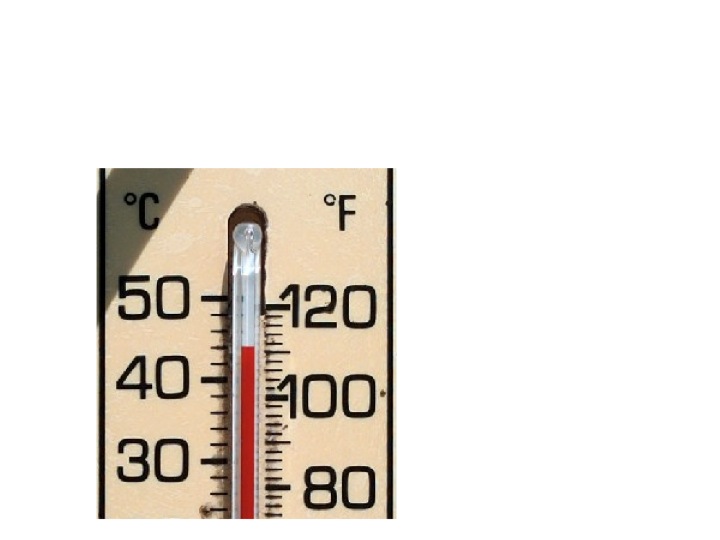
If you don’t agree with me, let’s look at it from your body’s perspective. When you exercise, you ask your body to metabolize fuel stores, regulate energy balance, and produce mechanical work so that you can move from point A to point B. All this effort produces heat. Your body has a lot of internal mechanisms to regulate body temperature, and they work pretty well. But your body has limits as to how rapidly it can cool itself off. Did you know that your body actually begins to compromise its ability to perform at around 72 degrees? Now think about how much challenge a 95 degrees environment places on that body.

Still not convinced? Let’s say that your typical Wednesday morning track work out is 12x 90 second 400 repeats, with 45 seconds between each. Think about how much stress that places on the body under normal conditions. Now let’s consider our weather reality. Its now 10-15 degrees hotter than usual and more humid. Trying to run that same workout under these conditions is significantly more stressful than typical. You may notice that you can’t make the 90 second split without taking more rest between reps. You may even notice that under these conditions, 90 seconds is not even possible. Let’s say that your triathlon training schedule has you doing a 5 hr ride on Sunday AM. However, the heat has slowed your pace down significantly after 2.5 hrs, and all you want to do is jump off the bike into a cool pool. Its OK to back off the workload to match the change in conditions – you’ll STILL GET THE BENEFIT OF THE WORKOUT. Shorten the ride. Increase your rest. Take longer breaks between intervals. Do whatever it takes to be consistent with your training, but realize that extreme weather requires some modifications to ensure we aren’t just pounding ourselves into the ground. Remember- you’re body doesn’t really know exactly how fast its going or how long a rest you are taking; it just knows that you are pushing it harder than you have in the past and with all this heat, it just might push back.

This post is written in memory of a local high school runner who died of heat illness during a summer training run.


Deep Thoughts: Do your muscles really have a memory?

You can run quarters on the track in 80 seconds. Maybe you can even do them in 60 seconds. Maybe you hit a PR for sustained power on the bike. You can drive your golf ball 250 yards down the fairway. Does this mean you are really performing at your potential?

Every time we practice a movement, we are reinforcing a particular movement in our brain. This is commonly referred to as “muscle memory”. Training technique is an often overlooked aspect in endurance world. Each joint in your body has an axis around which it moves, with muscles controlling the movement. These tissues are engineered to move a specific way. If we learn good muscle memory, we continually re-enforce good habits – and come competition day – we perform at our potential.

Competition to you might be a round of golf with friends on Sunday or qualifying for the 10,000 meter at the Olympics. At every level, focusing on your form can improve your performance.  Our body and mind strive to get the job done – at all costs. Often, this can mean we learn an incorrect strategy to get the job done. And even if your form is better than most, we all suffer form alterations when we fatigue. When these form changes occur, we have a decrease in efficiency. Since we are performing “different” than we normally do, we put more strain through our body’s tissues and are more likely to become injured. Understanding the stages of motor learning will shed some light on why we need to work on our form in the first place:

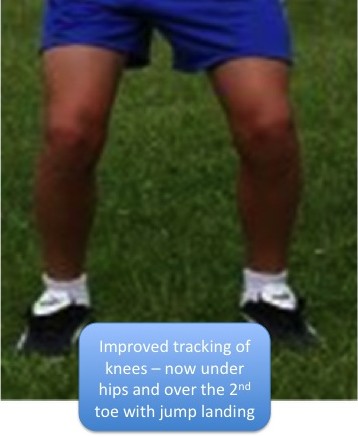
  1. Unconscious Incompetence – this means we have no idea that we are doing something with incorrect form. Most of us fall in this category. Look at the picture of the woman landing from a jump. The joints of the lower body are designed so that the knee tracks over the second toe when we land from a jump. The goal is to preserve proper alignment when we move. This athlete has no idea that her knees crashing to the inside are a problem. She doesn’t know that it significantly increases her risk for an ACL tear, patellofemoral syndrome, hip impingement, or a host of other issues. She doesn’t know that this landing technique will hurt her running, jumping, and cutting performance.
  2. Conscious Incompetence – We reviewed this athlete’s form issues with her. We showed her that the jump landing technique she uses can lead to injury and compromises her performance. She is now aware of it and understands the issue. This is the point where specific corrective exercises, cues, and drills are prescribed to her to correct this muscle memory. The more she practices these correctly, the more she re-enforces correct motion – however this stage requires a lot of conscious thought to perform the movement correctly . Because of the increased cognition or thought that this stage requires, the athlete may in fact be less efficient at their particular sport because they are “thinking” so much about the way in which they move. This is why drills often seem challenging.
  3. Conscious Competence – The athlete understands that there was an issue, knows correct technique, and now is able to perform correctly without thinking about it. She has removed the stresses from a flawed technique, and can perform correctly in sports-specific drills and in competition. The is the stage we want to be at! Think about some of the best performances you’ve ever done. What were you thinking about? Most successful athletes can’t even remember what they were focusing on. They were in “the zone” and just let their bodies perform using the skills they learned through a lot of practice.

In our quest to improve, we often focus on adding intensity or training volume thinking it to be the magic fix to take us to the next level. We’ve often heard the phrase “train smarter, not harder.” Adding time and focus to alter your technique pays off in spades. So let’s expand that saying to “move smarter, not harder”. The focus of the biomechanical analysis done in the SPEED Clinic @ the UVA Center for Endurance Sport is identify your unique compensations and make those muscles smarter!

Is stretching right for you?

Should I stretch? Should I stretch before or after? Will stretching make me a better athlete? Will stretching make me a more confident public speaker? We get these questions a lot. Don’t worry, we are happy to help and the confusion is not your fault. Seems every media outlet out there wants the BIG STORY. The headlines read  “best new stretch”, “best way to stretch”, or maybe even “stretching is killing you” –they really want you to by their magazine! So should you stretch or not? Is it OK to be tight? Is it a benefit? Is it possible to be too flexible?

Muscles, tendons, and ligaments shorten and lengthen as our joints move. Therefore, the amount of mobility you need in these tissues is pretty simple to define. You need enough for the tasks and sports you do, and nothing more. Is it really that simple? Yes – and let’s look at what happens when structures around our joints are too tight.

  1. Tightness in the muscles, tendons, and ligaments around a joint causes increased strain in the tissues. Think about a rubber band. You can stretch a rubber band back and forth from slack to fairly taught all day and it will be OK. Think about how much tension is in the rubber band as you shorten and lengthen it. Now imagine pulling he rubber band taught to 80% and then pulling it as far as you can. Do this for a while and look at the rubber band. If it hasn’t popped yet, you’ll notice that the rubber band actually begins to fray a bit – the increased tension inside the band causes damage. This increased tightness inside soft tissues limits our ability to withstand chronic strain inside our muscles – and leads to muscle strain and tears.
  2. The attachment points of your muscles, tendons, and ligaments form a bag of connective tissue around each and every joint called a capsule. Tightness in these structures can change the way the joint moves. Think about door pivoting open and closed on its hinge  – there is an axis on which the door moves. The door has no problem opening and shutting. Now imagine a force trying the twist the door as it opens and closes. This twisting force tries to move the door in a way that the hinges are not set up to pivot around. If you keep trying to open and shut the door, something will fail (the hinges will loosen, the door will warp)  – the point is that trying to move a joint in a manner that does not use its normal axis will cause pre-mature wear on structures. Tight soft tissues change the axis of mobility through the joint and cause excess wear on he surfaces of the joints  – the is the mechanism for the development of arthritis.

So now that we know the problems associated with tight tissues, all of us should stretch right?…. because the magazines say that stretching causes you to be more agile, stronger, recover faster, and warm up the tissues? Not a single one of these claims has ever been substantiated. You need “enough” mobility around a joint for the sports you perform. A runner and a gymnast have entirely different needs for mobility. Having more flexibility than needed for your sport has never been proven to be an advantage. In fact, we see just as many injuries to people that are hyper-mobile (have tissues that are too loose) as people who are tight.

Stretching a muscle is tearing tissue. Do I advocate stretching? Breaking down the structural integrity of our body is not something we should do unless its needed. Would you tear holes in your clothes for the fun of it? When an individual needs to stretch areas of their body that compromise their ability to perform, stretching is 100% part of their plan. But if there is no restriction on soft tissue mobility, there is no evidence that stretching will provide any benefit at all. In our next post, we’ll tackle the different types of stretching. For now, “enough” is enough.

Weight Lifting Benefits for Endurance Athletes

Can Hanz and Franz help you out? The seemingly endless debate of weight training for endurance athletes will carry on for decades. I do not plan to solve this in a single super-human blog posting today, but lets take a stab at this form an injury stand point, and hopefully give you some food for thought to modify your training program.

As an endurance athlete, your muscles receive a LOTS of high volume loads

  • Cross sectional area is important to disperse load. There’s the old question – “what puts more force per square area on the ground – an elephant or a woman in high heels?” – answer – the high-heeled woman. Don’t worry, I’m not calling her fat! The elephant weighs a ton….or tons, but has 4 very wide contact points to disperse his weight. The lady weighs a small fraction of the elephant’s total weight, yet the small stiletto heel and small forefoot disperse this weight through a very small area. What does this have to do with muscles and tendons?
    As you train, your body’s tissues are under a lot of stress. As you sweat along to your iPod, they generate tremendous amounts of force to move your body through space. Small muscle and tendon thickness means that there are greater peak stresses inside these tissues. A larger thickness (cross-sectional area) of these same tissues means that peak strain inside the tissue would be less.
  • Cross sectional area decreases with age. Along with bigger ears and longer noses, we lose muscle mass with age. Sorry – don’t shoot the messenger, it just happens.  This is not the end of the world though as studies have shown that even men in their 80’s can increase lean body mass (muscle mass) through strength training.
  • The way to increase cross sectional area is through strength training. “But wait- I am an endurance athlete – I am strong! – I train 25 hours a week on the roads, pools, and running paths!” No doubt you are ahead of the curve Mr./Ms Endurance Athlete, but there is a difference. Endurance training is primarily high volume low load training. This is not the specific stimulus to get increases in cross-sectional area within our muscles. The correct stimulus to increase the thickness of muscle and tendon tissue is to lift heavy. You are looking to lift a weight 5-7 times for 1-3 sets with a weight such that you can barely complete the number of reps in each set.  Endurance athletes are frequently told to focus on lifting for muscular endurance (high reps, low weight) – this type of lifting program does not target increasing tissue thickness (called muscular hypertrophy).

So what is our take home message from today? Is it that we should all begin lifting heavy starting today? Obviously not. The take home message is this. Increasing the thickness of your musculoskeletal system will help disperse the loads our body sees with chronic training volume. Younger athletes normally develop these characteristics. As we move into our 20’s and 30’s, some amount of true strength training is likely beneficial as part of your training throughout the season. As we move into our 40’s, soft tissue density decreases. This means we can’t deal as well with training stresses and may be more likely to develop strains and injury. That’s all for now – time to hit the gym.

Call Me Coach

I ran into the parents of one of my former patients today. She told me that her son said to tell me hi…. and thanks. You see we worked together, her son and I, following his injury last year. She said after we worked together and got him back to training for pole vaulting, he was able to finish out the season and got a full scholarship to college. She told me that he wanted to give me his state trophy – said I was the one who got him back to training to win it.

Now I don’t take credit one second for any of this. That kid had talent and an inner drive that would plow through a brick wall. Plus – more than anything else, he loved his sport. Hearing stuff like this – that’s what I live for. To even think that any part of what I did helped this kid get a scholarship and help in his dream – that why I get up every day to go to work.

Am I his coach? Well let’s look at this….. Webster’s defines coach as:

from the concept that the tutor conveys the student through his examinations] a : a private tutor b : one who instructs or trains a performer or a team of performers; specifically : one who instructs players in the fundamentals of a competitive sport and directs team strategy

These days, we think of what we do for a living as more mission statement than job. Our sole role being here is to aid you, as an athlete, in the pursuit of your goal. To reach your limits- and combine them with science to help you blow past them. Yes, we do have a really fancy lab and cutting edge this and that, but you have to look at the big picture. The big picture is not a number. This big picture is you. Your big picture. Your goals.

Open your mind to what we have to offer. We break you down. Individually. We figure out the limiting factor, and then we build you back again – stronger. You’ll leave here with a plan. A plan focused around your goals. You know those goals you are always thinking about? – that is why you are taking time to read this. You know you’re looking for an edge. We can teach you to use it.

Think of the SPEED clinic as your resource. Think of us as your coaches. Its what we love to do.

Keep pushing the limits-

Running Hot

I just got back from a midday run and it was HOT! (especially for a guy most used to running at 5:30 am). The heat of summer is here, and we must take precautions to avoid the dangers of excessive exercise in the heat. Excessive temperatures can impair performance and lead to dehydration and heat illness. Proper preparation and early recognition of heat illness will help us better enjoy our summer training.

Muscle action during exercise in our body’s main means of heat production. Only 25 percent of the energy produced by exercise is used for work or movement. The remainder of the energy is dissipated as heat. Some heat loss occurs directly to the environment when the environmental temperature is less than our body temperature. In warmer conditions, sweating is our primary means of losing heat. As our temperature rises, blood is shunted to the skin so that the heat may be lost through sweating. If heat loss does not compensate for the heat produced by muscle activity, body temperature rises. This is especially true if we allow ourselves to become dehydrated or in humid conditions where sweat loss is limited.

Heat illness can be graded as mild, moderate, and severe. Mild heat illness is termed heat fatigue and is characterized by tiredness and weakness, sometimes associated with a headache. Heat fatigue is generally responds quickly to cessation of activity and drinking fluids. Heat cramps may occur and are treated with rest, icing, stretching, massage and rehydration.

Moderate heat illness is termed heat exhaustion. Weakness and fatigue are more prominent. Other symptoms include dizziness, nausea, and even mild confusion. Treatment mandates cessation of activity, getting out of the heat, rapid cooling, and rehydration.

Severe heat illness is termed heat stroke and is a medical emergency. The runner now has an impaired level of consciousness which differentiates this more serious form of heat illness from heat exhaustion. The athlete with severe heat illness may actually have hot dry skin rather that be sweating. Immediate cooling and formal medical assistance is needed to treat heat stroke.

Heat illness can often be prevented by following some basic guidelines:

Acclimatization: If you are not accustomed to running in hot weather, gradually introduce time in hotter, humid conditions to your training. Otherwise, try to avoid the hotter periods of the day. Train early in the morning or later in the evening. Consider taking it indoors to the treadmill if it is especially hot.

Wear loose-fitting, light-colored clothing that allows moisture and heat to be lost from the body.

Proper hydration: In addition to fluids needed for daily maintenance, athletes need to replace fluids lost with exercise. Drink 2 cups of fluid 2 hours prior to exercise. Drink roughly one cup of fluid for every 20 minutes of exercise. If exercise is less than one hour, water is adequate. If exercise exceeds one hour, a sports drink will replace sugar and salt in addition to fluids. Not all of this needs to be done during exercise, but that not consumed during exercise should be replaced within a couple hours of training. Another method of monitoring fluid needs is to weigh yourself (unclothed) before and after exercise. Drink 2 cups of fluid for each pound lost during exercise. Now don’t overdo it either. Some folks adhere to the “more is better” theory. Drinking excessively, especially excessive amounts of water, can lead to hyponatremia (low salt) which can be potentially dangerous. So stick to the above guidelines and things should be fine. Also avoid alcohol and caffeine which can also promote dehydration.

Treat heat illness early. If you or a teammate experiences the signs of heat illness, stop running. Move indoors or to the shade. DRINK. Cool towels soaked in ice water can be draped over the athlete to more rapidly cool if necessary. Rapid cooling and medical attention are needed in all cases of severe heat illness.

And don’t forget about your skin. Sunblock to exposed skin to prevent sunburn!

Enjoy the summer!

Principles of Injury Rehab

There are over 30 million active runners in this country. Fueled by the ever growing participation in marathons and half-marathons, the group keeps growing! Most runners will at some time experience an injury severe enough to cause them to miss a week or more of training. Fortunately for runners, most of these injuries will indeed heal. An understanding of the causes of running injuries and basic treatment principles will hasten healing and return to training.

The majority of running injuries are related to overuse. We do too much, too fast, too soon. Most injuries occur during a transition period-a period where our training is undergoing some type of change. Common examples include increasing mileage too quickly, changing intensity of training, such as moving from a base/distance phase to a strength or speed phase, changing the surface one trains on, or even changing the type of running shoes. Rarely do I see injuries in folks who train very consistently, unless they are in the middle of a transition phase. The transition, rather than the absolute amount of training, seems to be liked closely to injury.

A number of predisposing factors to overuse injuries have been identified. Intrinsic risk factors are anatomic/physiologic factors inherent to the runner. Depending on the particular injury, potential factors may include muscle weakness or imbalance, inflexibility, a leg length inequality, or feet that are excessively high arched or flat.

Extrinsic factors are non-anatomic. Included here are primarily training errors and equipment. For the runner this is the too much, too soon, too fast part. Since most running shoes are meant to last about 400 miles, I see a lot of runners in the office who are ready for a new pair!

Addressing these intrinsic and extrinsic risk factors in addition to treating the specific injury itself will help ensure that one keeps running long after the presenting injury has resolved. Certain principles form the core of running injury rehabilitation:

1. Establish correct and specific diagnosis. Know what you are treating. Plantar fasciitis and calcaneal stress fractures both present with heel pain. The treatment plans and the amount of training one may do, however, varies greatly. Runner’s Knee refers to a specific condition related to abnormal motion of the patella (knee cap). Runner’s knee, however, is only one of many causes of knee pain in runners, each requiring different approaches to treatment. Having a specific treatment plan directed at correcting the specific problem will guarantee best success.

2. Control pain and inflammation. Although inflammation is usually only one component of a running injury, its presence often leads to pain and prevents progress in rehabilitation. Common measures include:

Ice: 10-15 minutes 3 times a day. No ice water buckets which can cause frostbite. I’m often asked which is best, ice or heat? In any injury in which there is active swelling or early on, the first few days after the onset of pain, ice is best. In the absence of swelling, after a few days either ice or heat can be helpful, whichever seems to help most.

Medications: Aspirin or antiinflammatories can be helpful for a short period of time. Certain caution should be used, however. If you are allergic to aspirin or an anti-inflammatory, are pregnant, or have had problems with ulcers, kidney, or liver disease, you should not take antiinflammatories. If you take antinflammatories for 2 weeks and still have symptoms, it’s time to call your doctor. In some instances steroids, either tablets or by injection will be indicated. Remember, however, that steroids function only as an antiiflammatory and shouldn’t be viewed as a magic bullet. They are only part of a more comprehensive rehab program. Also, since injected steroids can potentially weaken the local soft tissues, I recommend not running for 10-14 days following an injection.

Modalities: Athletic Trainers and Physical Therapists can apply certain modalities which are helpful in controlling pain and inflammation. Examples include electric stim, ultrasound, iontophoresis (using an electric stimulator to deliver anti-inflammatory medication) and phonophoresis (using ultrasound to deliver anti-inflammatory medication). Compress/elevate: If a joint is visually swollen (such as following a twisted ankle), wear a compressive wrap or sleeve. Elevate the limb on a stool when sitting.

3. Promotion of healing. This is where rehabilitative exercises come in. Flexibility, strength, proprioception/balance and functional drills are all important. More than anything else the athletic trainer or physical therapist does for us, these are the key. Rehabilitative exercises should not be thought of as just reinforcing strength and flexibility. The focal exercise also enhances blood flow and stimulates tissue remodeling. So, even the strongest and most limber of us will benefit from rehabilitative exercises. And remember-they only work if we do them! When injured, plan to spend 20 minutes a day on rehabilitative exercise in addition to any other training we are doing.

4. Control abuse. This means correcting the factors that lead to the injury in the first place. Look over your training and see if there is any factor that has recently changed, such as an increase in mileage, or the addition of strength or speed work. Talk to your coach to see if perhaps this transition can be made more gradually. Have your started running different courses? The addition of hills or trail running have been linked to various running injuries. Braces, straps, and orthotic devices, when properly used, will minimize overload to affected structures. And be sure that your shoes aren’t overdone. 400 miles max-then they become kick around shoes.

5. Fitness and conditioning. General fitness enhances local blood flow which aids in tissue healing. It also helps prevent deconditioning including areas that aren’t even injured. Certain injuries (ie sciatica or stress fractures) require rest from running. For most running injuries, one can usually continue at least some level of running. Supplement what you miss from running by adding time cross training. Cross training may also be an option for those who can’t run at all, but be sure to clear this with your doctor. Good options include deep water running, the elliptical machine or the bike. Try to simulate what you would normally be doing on land, whether it be short repeat intervals, tempo sessions or long aerobic distance training.

6. Return to sport. With most running injuries, runners can usually continue to least a modified schedule of running with symptoms dictating rate progression back to full training. When in doubt, be sure to discuss your running plan with your physician and trainer. Certain injuries (ie stress fractures) require a certain amount of time to heal even after we no longer have symptoms. Plan to continue the rehabilitative exercises for several weeks after return to training to ensure correction of the risk factors that may have led to injury.

Some additional practical guidelines:

When returning to running after more than a month off, start with a walking, then walk-jog (walk a minute, jog a minute repeats), then run program.

Increase mileage by no more than 10% per week. The longest run should not increase more than 2 miles in any given week. One’s long run should usually not exceed 30% of one’s total weekly mileage. One exception: First time marathoners participating in a lower mileage program. Remember, however, that this amounts to a big progression, so avoid temptation to exceed one’s program in other areas.

Change shoes every 400 miles and be fitted by someone familiar with running shoes and gait styles. The shoe your training partner loves may not be ideal for you.

When running with an injury be sure not to exceed the “Relative Activity Modification Guidelines”:

1. You may run with mild pain (0-3/10). If you have moderate pain (4-6/10), back things down until the pain is no more than mild. If you have severe pain (7-10/10), stop running!

2. Discomfort that is present at the beginning of a run, but resolves after easing into the run is usually associated with mild injury. If you know that symptoms will worsen beyond a certain pint (mileage or pace), you have defined your limit. Do not go beyond this point.

3. No limping allowed! Sounds like a no brainer, but folks violate this all the time. One should not run with an injury that forces a change in normal gait. The flip side is that if you are able to run with a normal gait and the discomfort is no more than mild, the likelihood that healing is prolonged is minimal.

Remember-with certain injuries (ie sciatica, stress fractures) we simply should not run. When in doubt, consult your physician for specific guidelines.

Following these principles should ensure most complete healing and a safe return to training.

See you on the roads!