Tag Archives: triathlon

“In the Highcountry” film premier – this Tuesday night @ Rebound!

High-Country-vimeo-Thumb-smPNW premier of “In the Highcountry” is this tuesday night @ Rebound Westside. We’ll be outside under the stars – Show up at 7:30 to hang out with your friends, sip free beer courtesy of Deschutes Brewery, chow popcorn, watch an acrobatics show with the YogaSlackers, and the highlight of the night….the film and a conversation with the film maker  – Joel Wolpert. cost is $5 plus a can of food. All food goes to those locally in need, and ALL PROCEEDS go to CORK youth developmental running probrams here in Bend!

In the High Country is an impressionistic mountain running film: a visual essay about a life in the mountains. It looks at running from a new perspective, both visually and in the style of running. This kind of movement blurs the lines between running and climbing, between human and mountain.

One way to learn our place in the world is through millions of accumulated steps: on gravel roads, glacial creeks, and over high mountain summits. Each stride imprints the terrain more deeply in the mind. The importance of any specific event falls away in the face of an ever-building accumulation of understanding.

In the High Country is the result of a year-long collaboration between filmmaker Joel Wolpert and mountain-runner Anton Krupicka. The film follows Krupicka’s evolution in running from his roots in Niobrara, Nebraska, to the Roost, his pickup truck home, and the miles in between; from itinerant shenanagins to speed soloing on the Flatirons.

special thanks to our local sponsors for making this night possible:
REP Biomechanics Lab — Deschutes Brewery — FootZone — Fleetfeet

Ground-breaking news: runners who are faster than you have longer strides

This year, I got to present along an all-star cast at the USATF SPEED Summit in NJ. Basically, the goal is to breakdown the elements of coaching based on science, and then use this science to bolster what we do on track. Smarter plan = better results. Or maybe I should say smarter people help us develop better plans? This is the conference I was most looking forward to this year, and it did not disappoint.

So let’s get past the sarcasm in the title, and go straight to the big picture: if you run slow, you take short strides and your turn over isn’t that quick. The only way to run faster is to increase your turnover and your stride length. So it shouldn’t be a surprise when you hear that faster runners have a longer stride length than slower runners. But now we get into an interesting question…..is stride length the cause or the effect? Or more specifically, why do some runners appear to bound effortlessly over the ground?

Screen Shot 2013-06-10 at 12.41.43 AM

They are stronger. About 80% of the cost of running comes from holding your body up against gravity. If you have strength reserves, it’s easy to combat gravity and float from step to step.  This extra strength enables more “hang-time” which translates to a longer stride length with less effort. Take home here? Get stronger.

How can you develop running specific strength? You can run. Collegiate and sponsored athletes get two workouts a day, and are racking up big miles. You know what else they do? They lift weights to develop strength reserves. Its highly likely that you don’t have the time and energy to rack up monster miles each week. But take a look at your week. Can you examine your training program and budget 30 min 2x’s a week for some strength work? If the answer is no, take a look back at the Achievement Triangle post…..and ask yourself where you’d like to be.  And if you are over 40, this is not optional. Get strong to get faster.

Want more? Check out this reference: Weyand

Triathletes: don’t let your cycling mess with your running!

What can a new research study tell you about running off-the-bike? Sometimes, research just tells us things that are somewhat interesting. And other times, like this one, research provides a very nice take home message of which we should all take note.

A few weeks ago, we published a study called “Sagital Plane Kinematics During the Transition Run in Triathletes.” Don’t let the fancy words throw you off. All you need to know is this: Cycling before your run makes it harder to maintain your posture. 

Now those of you who have seen me for an evaluation, read my Running Times article called “P is for Posture”, or read my book know that this is the un-sung skill that can make or break you as an athlete. Posture is the foundation around which the most powerful muscles in your body attach. If the position of those muscles is optimal, a number of things go really well…..most notably peaked performance, and a better stabilized chassis for a reduced risk of injury. If this optimal position is compromised, then you aren’t operating at your best.

So, if I told you ahead of time that doing “A” before “B” will produce complications that make “B” harder, you’d (hopefully) try to prepare ahead of time to minimize, or eliminate those complications. Right? …. Well, here’s what happens.

We had a group of triatheltes come into our lab and run. We measured a number of factors related to the way they ran to get a baseline. This same group of runners came back a second time, but before they ran, they cycled for 30 min at a just-easier-than-threshold effort. Their post-bike running data showed that they had more arch in the low back, a more anteriorly-tilted pelvis, a more flexed hip, and less hip extension.

Screen Shot 2013-06-03 at 12.31.19 AM

poor position = poor performance

For those of you wondering if this is good or bad, I’ll give you both the simple and more in-depth version. Running off the bike makes you look more like the person on the left than the person on the right.

optimal posture = optimal performance

optimal posture = optimal performance

For those of you who want to know why, and get more in depth –>  read my article in Running Times, and then read Ch 6 and 8 in Anatomy for Runners, especially the “3 non-negotibles” on p.183, and the test on p. 196.

I simply cannot downplay the significance postural alignment. If you screw this up, you’ll screw up your run. And given that 70% of injuries in triathlon occur in the run, this is yet one more contributing factor.

Cycling doesn’t “hurt us”  – then why do we see postural shifts occur in triathlon? You are bent over in a forward position. Some tissues get bound up. Others get lengthened.  And we only did this for a 30 min ride.  What happens if you force this constrianed position for 5 hrs, and then go run? We don’t know for sure (because we didn’t test this) but if I was a betting man, I think we’d see the same patterns, but somewhat worse.  To be fair, we only looked at their running data for the first 14 min of the run. Maybe posture improves after this 14 min. Maybe it stays the same. Maybe it gets worse. We didn’t test it. But no one wants two slow or injury-prone miles out of T2. And due to the fact that central fatigue typically makes our posture worse, I’d think this is something we should all pay attention to.

So here’s your chance to beat the odds, and be “smarter” than the average. Here’s your mission for today:

  1. Find correct posture standing right now (see above references)
  2. Hold correct posture walking around your office or house.
  3. Go for a run, maintain correct posture (and if you fall into the “back seat” stop and fix it!)
  4. Go for a brick workout, and pay special attention to your postural alignment off the bike. If you focus on this in training, it will be easy to correct on race day. You should be able to run any pace – from an easy run to 400’s on the track – without compromising your posture alignment. 

I’d like to thank our former grad student and first author, Nicole Rendos, for taking the lead on this study. And if you are looking for more ways to tune-up your triathlon training, come see us this August for our REP Triathlon Camp!

Announcing the REP Triathlon Camp! – immerse yourself with the best, and achieve the best

Its just like the summer camp you went to as a kid. Except that……
Instead of eating hot dogs, we’ve got fully catered meals.
Instead of “being prepared” like a good Scout, we’ve got full sag on every workout.
Instead of dodgeball, we start each day with body work, strength training, or yoga. 
Instead of “trying harder” to make it through the obstacle course, we’ll coach you to “move smarter” through the most efficient mechanics for your sports.
Instead of a councilor that reads comic books, your camp leaders wrote the book on training, and teach nationally.
Instead of cheesy sing-alongs, we’ll show you all the secrets to training, equipment, and recovery for you are fully prepared for every race scenario.
Instead of fruit punch, you’ll be surrounded by the most thriving microbrew scene around. 
And we’ve even got a campfire for nightime chats with professional athletes and experts. 
So like we said, its just like summer camp when you were a kid.
 
 
The REP tri camp was born out of a simple idea. Build the best possible experience for our athletes. Period. 
Knowledge. Tools. Decades of and coaching and clinical experience. Passion. 
Thus summer, take your body to a whole different level. 

TONIGHT: Beyond Pink: Strong Women, Strong Athlete

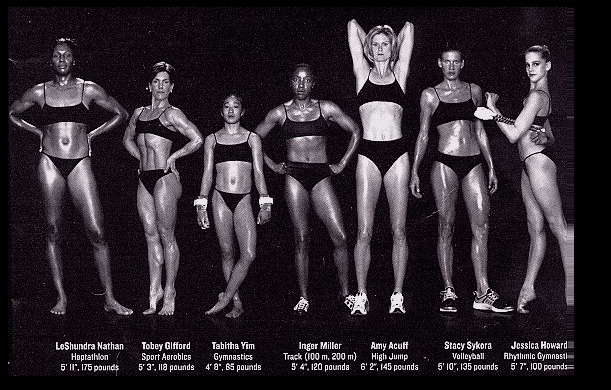
There's no "one look" for every woman, and no "one body" for every athlete

There’s no “one look” for every woman, and no “one body” for every athlete

Ladies – tonight its all about you!

Sports Illustrated ran a photo series years ago that is one of the most powerful collection athleticism.  Athletes come in all shapes and sizes, and one of them is YOUR size. And that’s the point of tonight’s talk. As the kick off to the REP Lecture series tonight in Bend, we are going to discuss “the unique needs of a woman.”

We’ll take a look beyond the marketing drivel and discuss what really is unique about your needs in pursuit of your goals. Come grab a seat and a beer, and find some tips that take you to the next level.  Hope to see you 7:00 tonight at Rebound Westside!

The MOST important single sentence you’ll ever read about training

I won’t keep you in suspense, here it is:

Instead of getting caught up in the latest fads, always make sure each workout is contributing to your long term goals.

I was in the airport yesterday and starring at the news stand. Every single issue has some variation of “the 5 workouts you must do this month” plastered across the cover. There are lots of great workouts out there, but only you can identify who you want to be.

Its pretty easy to work backwards. Define your goal, and ensure that each day’s heart beats, muscle contractions, nutrition intake, and rest schedules are target focused on that goal. Because we both want the same thing: for you to be able to cross your next challenge off your list.

Pace Maker: an interview with Today in PT

Today in PT is a magazine for the physical therapy profession. They wrote:

Americans are increasingly on the run, with Running USA’s 2012 State of the Sport report counting nearly 39 million runners. Runners spend nearly $2.5 billion annually on footwear, according to the report. But, unfortunately, new shoes don’t come with accurate information and proper training to safely and successfully pursue the activity. For that, Today in PT turned to Jay Dicharry, PT, MPT, SCS, author of “Anatomy for Runners: Unlocking Your Athletic Potential for Health, Speed, and Injury Prevention.” click here for the rest

They threw out 10 questions, and i threw out 10 answers. Check out the link if you’d like to see some of the reasons why i do what I do, a few lines on the book, and why i got into this aspect of athletic injury care in the first place.


Running Injury Management on Therapedia

Fresh off teaching this past weekend at University of Michigan – a great group of folks joind together for a course called “Putting the Athlete Back in Triathlete: a clinician’s role in care of the endurance athlete.” …….and more content to come.

I’ve been invited to be a part of Therapedia’s webcast series, and its airing Thursday this week. And yes, it will be available to view after the course as well. Check out this link for what looks to be an interesting discussion!

Link

Coffee Talk: TrailRunner Nation Podcast

The guys at Trail Runner Nation podcast gave me a call, and asked a few questions. If you’d like to hear some inside scoop on what you can do to keep healthy and happy on the way to your next PR, grab some of your favorite brew, and tune in here.

We’ll debunk some myths, babble about footwear, talk about why we don’t treat injuries by treating symptoms, and discuss some cutting-edge approaches on strength training for endurance athletes. Its a long hour of conversation, but all this talk is aimed at ways to help make running fun. Because that why we do this stuff. And more fun is, well,  just more fun.

Running Footwear: A critical look at what we know about footwear and how to select the best fit for your athlete

The media likes to spin things to make headlines. I’m not too big on spinning, I’d rather just help educate. If you’d like to clear the air and see what we know, what we don’t know, and what’s been spun, you can check out this webinar I’m doing for USA Track and Field next week on Mar 26th. Coaches will get CEU’s from their couch.

The make of running shoes have historically gone from one side (thin and flexible) to the other (stiff and bulky) and are now moving toward the middle of the road. Which is best? And how do you match running shoes to an individual runner? In this webinar presentation, Jay Dicharry will comb through relevant research and clinical experience to help you approach your running retailer with the knowledge of selecting the right tool for the job. Learn how to ensure that you are running in your shoes rather than your shoes running you! By the end of this webinar you’ll be able to understand:

  •                 the evolution of footwear
  •                 how footwear has been classically prescribed
  •                 proof that this fit model is ineffective
  •                 how shoes impact your running form
  •                 how barefoot running impacts your form
  •                 how shoe wear impacts your form
  •                 how to select shoes for you
  •                 what minimal shoes are, and if you are ready to make the transition