Strength class tonight for Little Wing -the Bend based elite running team– and 2 local stud triathletes ….and things got a little funky….

Strength class tonight for Little Wing -the Bend based elite running team– and 2 local stud triathletes ….and things got a little funky….
I work with many athletes – and to be honest, I get just as much personal satisfaction seeing a person complete their first 10K as I do helping an elite earn a spot on the podium. I’m always humbled and honored when athletes seek out my help, and even more humbled when they put out some nice footage such like this as a way of saying thanks. I’m really just trying to do my job!
Well, professional triathlete Linsey Corbin is also trying to do her job with a stellar performance in Kona 2 weeks from today. Check out Day 2 on linseylucky13.com to learn what Linsey and I have been working on together.
If there was ever a good topic for an episode of Mythbusters, it would be this: should you pedal circles or pedal squares? We’ve been told that “pedaling circles” is important so that we can apply a smooth even pedal stroke. And word on the street is that this uniform application of power around the cranks is more efficient and makes a better rider.
We’ll lets mock up our own episode of Mythbusters. Let’s pretend that you are doing your thesis on power production in cycling (I did). And let’s also pretend that you are trying to get good data on good cyclists (this was my goal). In my research, I tapped into the best client database I could think of (the US Olympic Training Center). And lastly, let’s pretend that you could examine the pedal cycle of the entire national team, and developmental athletes (I could). What would you find?
We’ll, this episode of Mythbusters would be pretty clear. World championship and Olympic medals have been won by riders who feature a smooth pedal cycle (circles) as well as cyclists who are mashers (squares). Uh oh. Don’t’ you hate it when real world data flies in the face of what you’ve been told. So where does this leave you?
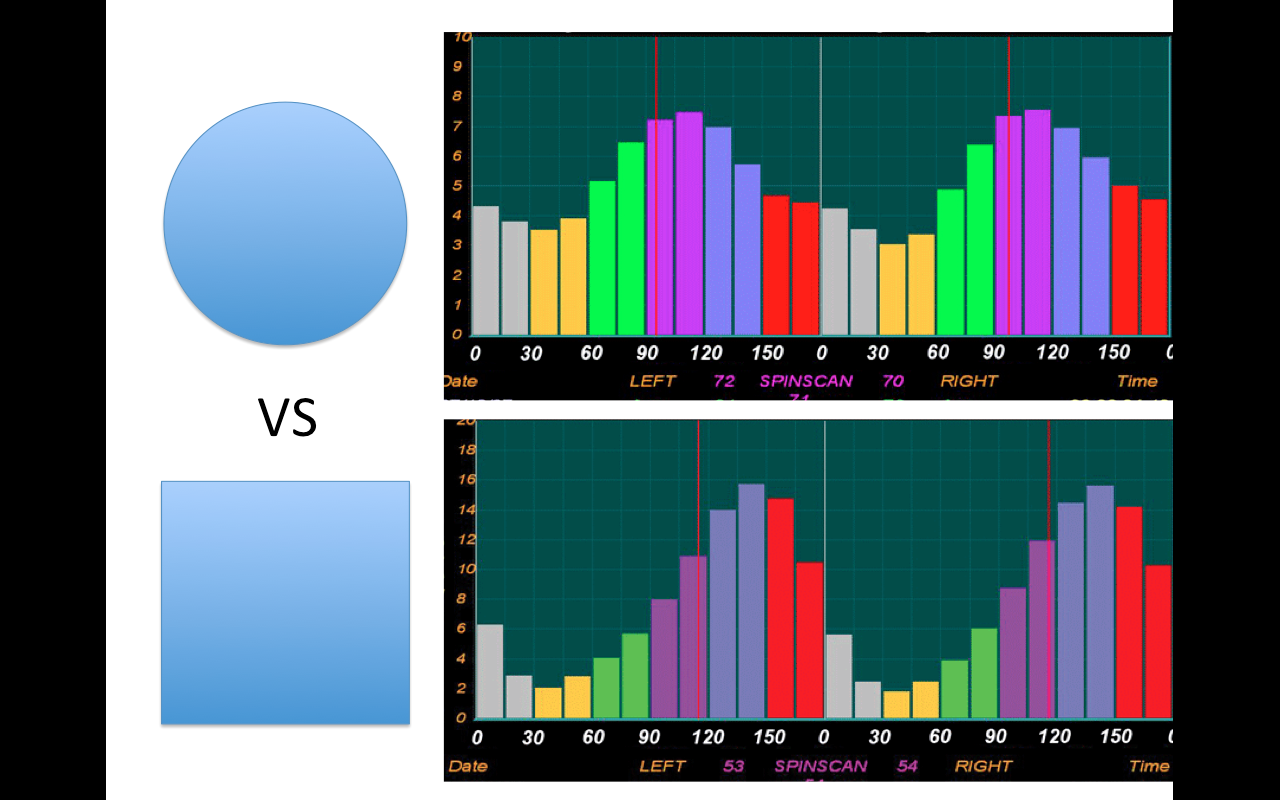
Spin Scan Pedal Profile: Looking different doesn’t mean one is better
Its not to say that pedaling style is not important, because it is. In fact, research shows that elite cyclists have better pedaling mechanics than both recreationally competitive cyclists, and even elite triathletes. So if its not the “shape” of the application of power, what does better pedaling mean? Better cyclists have lots and lots of practice turning the pedals over. All this “practice” helps them produce the right amount of force from each muscle, without fighting, or co-contracting muscles during the pedaling cycle. They ride smoother and don’t fight their own pedal stroke. They also can change their pedaling cycle easily when they fatigue, in breaks, or up climbs. Having lots of “strategies” to tap into help as them adapt to the race conditions and terrain they are facing.
The take home:
▪ If you are a rider that has had success mashing your way along at 75 rpm, it doesn’t mean that you must learn to spin at 110 rpm just because someone else does.
▪ Pedaling technique is a variable that better cyclists adjust based on terrain, fatigue, and surface. It is still worthwhile to learn proper pedaling strategies. If you do want to improve your spin, the most beneficial cues are to “scrape mud” off the bottom of your shoe at the bottom of the stroke, and to “kick a ball” at the top of the pedal stroke.
▪ Traction matters. In general mountain bikers have a smoother pedal stroke to maintain traction. If they put all their power around a small part of the pedal cycle their tires spin out. If you spend time on dirt, emphasize smooth power to keep your tires hooking up – especially on the climbs.
▪ Better cyclists don’t necessarily pedal circles or squares. They just pedal better circles and better squares – stop reading and go for a ride!
Spin Scan Pedal Profile: Looking different doesn’t mean one is better
Cycling is a balance act – you want to produce as much power as possible to make your bike move forward, while maintaining comfort, aerodynamics, handling, and safety. But quite often, we loose sight of the big picture in search of the “fastest looking position.” The most common question I get from time trialists and triathletes is, “Can you make me more aero?” Let’s tackle this issue head on using an example, and some science.
 Several years ago, I did a fit on a medical resident; we’ll call him Bill. He was three years into his cycling career and was doing quite well at the district and state level. He came and saw me for a bike fit on his time trial bike. His goals were to podium at state and place top 10 at nationals, and also to eliminate his low back pain on the bike. I’ll spare you the details, but after his fitting, his back pain was 100% gone, he won state, and placed 4th at nationals in the 40K time trial. The next year, he stood on the podium at nationals. Bill was very happy.
Right after nationals, Bill graduated and began making more income and sought out the advice of a wind tunnel to squeak out a performance advantage. The folks in the wind tunnel were able to produce a 28% improvement in his drag coefficiency. This is a very, very large improvement in aerodynamics! Bill left and was excited to see how this new position would play out over the season.
Well, things didn’t play out so well. Bill called after several months of riding in his new position. His back pain returned. He hadn’t made the podium in a single time trial all season. And he wasn’t able to hit the same power output on his new time trial position that he could easily hit on his road bike. Guess what we did? We adjusted his fit exactly back to where it was when we last worked together. Bill made the podium in his next race, and the next, and the next, and won nationals. Bill was happy again.
What happened? Bill hit the tipping point. Sure, he was more aerodynamic, but aerodynamics don’t make you ride fast; producing power does. Let’s back this up with some data:
To get aerodynamic, most riders opt for a low, forward position to get their trunk down and out of the wind. This creates two issues. First, it compromises power by shifting emphasis from muscles in your hips (very fatigue resistant) to your knees (fatigue quicker). Poor compromise. Second, I’ve personally been in the wind tunnel with athletes and it is possible to get excellent drag numbers while maintaining a very powerful pedal stroke. This gets complex and very individualized, but good bike fitters can not only help you look better to the wind, but look better to the clock
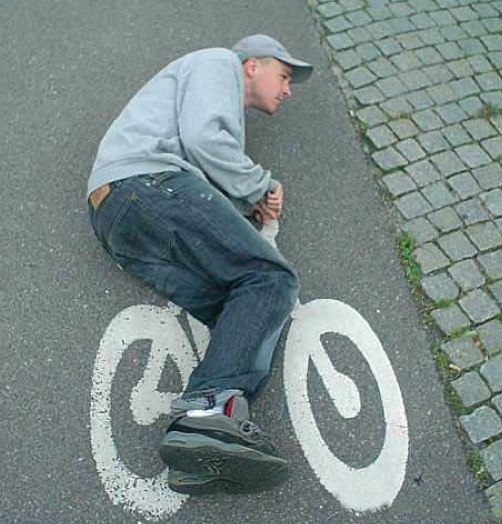 Bike fit is critical. Why? cycling is a pretty constrained motion, and you go through a LOT of repetitions. Even the forces on the body are much lower than running, the volume on the bike can still add up to a lot of wear and tear.
So can it make you faster? Optimizing the position of your engine (you!) over your machine (your bike) does in fact pay off. The research is pretty much all over the place on bike fit. Doing well controlled studies is pretty hard to do for cycling, because people are just different. But when you really nail down what’s different, and work to not just improve the “Fit” but also improve the rider on the bike, big things start happening. In light of this, I thought I’d offer some feedback from a few of my clients over the past year.
“after years of low back pain on the bike, nothing hurts! – thanks!”
Chris Eatough – Professional Mountain Biker, Six-time World 24hr Solo Mountain Bike Champion, Five time US 24hr Solo Champion
“wow – this is going to be fast! – thanks!”
Ben King – Professional Road Cyclist, US National Champion
“Thank man! Had a solid ride yesterday with the new position! Best power output so far by a ways”
Jesse Thomas – professional triathlete, multiple-time Wildflower champion
“Basically, I feel like a kid in Maine again: Lower seat, cleats further back, putting down the power, and trying to ruin corners. Its really fun”
Adam Craig – professional mountain biker: US Olympian, US Champion in XC, Super D, and Cyclocross, Single Speed World Champion
“Loving my bike fit – fast and comfy”
Carl Decker – professional mountain biker, multiple time Downieville All-mountain Champion, US Super D champion, US Road Champion, Single Speed World champion
“Loved, loved, LOVED it! Bike felt so good – Thank you!!!”
Serena Bishop Gordon – 2013 NUE Series Champion, 2nd place US Mountain Bike Marathon Nationals
“The juice is back – nothing hurts and feeling strong!”
Matt Lieto – professional triathlete, commentator, author, fastest bike split IM Whistler
I don’t work magic, but I do my best to help you achieve your goals. Give me a call if I can help you out with yours.
It seems the Brits have been busy. A few weeks ago, a new Royal baby greeted the world, and it seems my collection of bedtime stories to Prince George was released just in time!
 Anatomy for Runners has made quite an impact. Since its release almost one year ago, its been one of the top selling running books, and achieved significant accolades with runners, coaches, clinicians, and the industry. In fact the book has done so well, that it was picked up by a UK-based Lotus Publishing Group. The overseas edition, re-titled “Run Like an Athlete” is available now to anyone on the other side of the pond. I’m quite happy with this title – its actually hat I wanted to call the US book in the first place. It features all the same excellent content, although its been translated from English to well, English……
Yes…..The Queen’s prose is quite different from our countrymen’s linguistics. Going through the editing process with the publisher, I’m shocked at how much it was altered for the european audience: “Soccer mom = football mum” are among thousands of edits.
Note: this version of the book is best utilized with hot tea, crumpets, ascots, and a Hugh Grant movie playing in the background.

my copy arrives by none other than the Royal Mail

Adam Craig gets his position optimized at the REP Lab prior to the season
Cyclists want two very simple things. They want to be comfortable on their bike, and they want to be fast. And anytime we “want” something, we must ask the question – how hard must I work to achieve it? Or in this golden age of cycling, a lot of cyclists ask a different question – can I buy more speed? Well, let’s stop asking questions, and start producing some answers.
As a physical therapist, I can tell you that cycling takes its toll on the body. You do a fairly limited range of motion over and over and over again for thousands of miles a year. If things are lined up properly on the bike, and you are careful and follow a smart training program, you’ll maximize efficiency and prevent injury. When things are “off”, we wind up with imbalances that manifest themselves as injury. Injury is a whole other topic for a latter time. The other problem we wind up with is poor efficiency. Proper knowledge and equipment go a long way towards accomplishing a goal of optimal fit.
I’d like to summarize a paper that was published in a peer-reviewed, independent journal. Asker Jeukendrup and James Martin wrote “Improving Cycling Performance: How Should We Spend Our Time and Money”. The authors wanted to quantify the effects of various cycling factors to see which was most beneficial from both a time and cost standpoint. In this study they use simulated “models” to arrive at their predictions. Since they aren’t comparing apples to apples and oranges to oranges, the mathematical models allow them to base time gains on previously established research findings (from independent, peer-reviewed journals). Instead of just saying, “bike fit helps”, the authors sought to quantify exactly how much help a cyclist gets with a given alteration in their program. If you ride for Team Sky, you can skip the rest of this, as your cycling resources are unlimited. However, if you are a cyclist balancing riding, school, wife, kids, girlfriend, busted radiator, food, and time at the dog park – read along. They examined both Internal and External Factors as shown below:
| Factors Changed | Time Savings Observed in 40K TT |
| Internal Factors | |
| Training | 1-7 minutes |
| Caffeine | 55-84 seconds |
| Carbohydrate | 32-42 seconds |
| Altitude Training | 23-34 seconds |
| External Factors | |
| Body Position | 2-2.5 minutes |
| Aerodynamic Wheels | 60-82 seconds |
| Wheel Weight | 10-72 seconds (grade dependent) |
| Body Mass | 19-25 seconds (rolling TT course) |
| Bicycle Mass | 5-13 seconds (rolling TT course) |
You can see that the old adage holds true – there is no substitute for training. Period. Got it? Yes – you have to ride you bike. And you have to ride smart. Lots of base, properly periodized training plan, intervals, and a good taper all add up to good performance on race day. Aside from training, this article offers some interesting findings on where we should concentrate our efforts. Bike fit is key. It’s free speed. Faster with less effort and more biomechanically sound. It’s a win-win all around for the time and money you’ll invest and performance gained. Also – it’s a benefit that is there every time you get on your bike. You are always reaping the benefits of training in the most optimum position. It is very different then spending 1200 dollars on a pair of wheels you only get the benefit from 5 or 6 days a year.
At the REP Lab, we use a whole lot of technology, knowledge, first hand trial and error, experience, and common sense to achieve the most optimum fit for you – not a formula out of a book. A solid bike fit gets you a whole lot closer to achieving your optimum performance now.
I encourage you to check out the full article if you want more information:
Jeukendrup, A.E., and Martin, J. Improving Cycling Performance, How Should We Spend Our Time and Money? Sports Med; 31(7):559-569
Last night, you as a community:
Filled a garbage can full of food (kudos to whoever brought the red beans and rice) for Neighborhood Impact
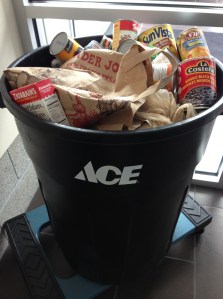
Raised money for Central Oregon Running Klub (CORK) Youth Development: 100% of the ticket sales went straight to a great cause

Watched the YogaSlackers put on amazing show of athletic skill and balance, and come up out of your seats and joined in the fun (note: the 4 people you see on the ground in this photo are trained skilled professionals, the 4 people laying, hanging, and sitting on the trained professionals’ feet are not, and were pulling off these tricks within 5 min!)

Watch as Joel Wolpert’s camera depicts the soul of Anton Krupicka trekking, running, and climbing all over our world. If you weren’t able to join us last night, you can check out the In the Highcountry here.

Lastly – I’d like to thank our gracious sponsors for making this evening possible: Deschutes Brewery, FootZone, Fleetfeet, and the REP Biomechanics Lab @ Rebound Physical Therapy.
 PNW premier of “In the Highcountry” is this tuesday night @ Rebound Westside. We’ll be outside under the stars – Show up at 7:30 to hang out with your friends, sip free beer courtesy of Deschutes Brewery, chow popcorn, watch an acrobatics show with the YogaSlackers, and the highlight of the night….the film and a conversation with the film maker – Joel Wolpert. cost is $5 plus a can of food. All food goes to those locally in need, and ALL PROCEEDS go to CORK youth developmental running probrams here in Bend!
In the High Country is an impressionistic mountain running film: a visual essay about a life in the mountains. It looks at running from a new perspective, both visually and in the style of running. This kind of movement blurs the lines between running and climbing, between human and mountain.
One way to learn our place in the world is through millions of accumulated steps: on gravel roads, glacial creeks, and over high mountain summits. Each stride imprints the terrain more deeply in the mind. The importance of any specific event falls away in the face of an ever-building accumulation of understanding.
In the High Country is the result of a year-long collaboration between filmmaker Joel Wolpert and mountain-runner Anton Krupicka. The film follows Krupicka’s evolution in running from his roots in Niobrara, Nebraska, to the Roost, his pickup truck home, and the miles in between; from itinerant shenanagins to speed soloing on the Flatirons.
special thanks to our local sponsors for making this night possible:
REP Biomechanics Lab — Deschutes Brewery — FootZone — Fleetfeet
Today, we’ve got a smattering of amazing educational opportunities to announce:
This Thursday in Bend, OR @ 7:30 at the Westside Clinic: Athletes – Please join Jay Dicharry PT (REP Biomechanics Lab Director) Matt Lieto (Pro Triathlete) and Keats McDougal (Ironman Canada & Tahoe Director) for a night of Mobility and Multi-sport discussion. Jay will provide the latest research on mobility and best practices for multisport athletes. We’ll answer the most common questions: What does stretching do for the body? When should you stretch? How long? What’s the difference between dynamic warm-up and stretching? And how does soft tissue work play into this whole discussion? Next, Matt will discuss his training plans and and upcoming race prep considerations. Matt will show you how the lessons he’s learned along the way can help you prepare better for your next event. Finally, Matt will lead a Q and A with Keats. They’ll provide an overview and considerations of these two challenging courses. It will help you prep for this year’s race, or feed your stoke for next year! Stick around after for a question and answer session with our panel. And yes, we’ll have beer. Cost: free. No brainer!
This weekend in Boulder Colorado (7/13-7/14): Calling all healthcare professionals – are you tired of getting your information on running mechanics from the mainstream media? Would you be interested in a immersive weekend of education that is based around hundreds of peer-reviewed articles, hands on clinical assessment, and gait cues? We’ll construct a framework of what we know about running mechanics and their effect on performance and economy. And more importantly, we’ll show you how this information applies not just to the masses, but to your individual patients. In short, this is all the stuff you wish they had told you in Med school, PT program, or ATC curriculum. There are still a few spots left. See here for details.
August 23-24th in San Jose: Tri-athletes and would-be coaches– are you looking to get your Level 1 certification? Then join us for the USA Triathlon coaching clinic. Two days packed full of essential knowledge to help you and your athletes succeed.
Sept 21st and 22nd in Bay Area: Running Coaches – this one is all for you. We are going to delve into the truth behind running mechanics, screening strategies for your team, the impact of strength training to improve performance, discuss the role of footwear, and more. Andrew Allden chairs this event – he’s brought in a knock out panel each and every time – Learn to think outside the box to take your team to the next level @ this USATF Level 3 Coaching Seminar. More info here
Yea, I know – blogging and tweeting is supposed to make us all smarter. But you know what really makes us smarter? talking face to face. See you soon!
 Jay Dicharry's Website, An Athlete's Body