Trail Running Tips and UROC

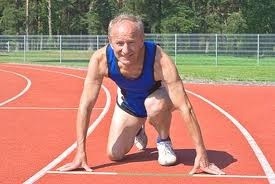
What’s different about trail running vs road running?

Is there anything you can do do better prepare your body for these differences?

Most all of the elite trail and ultra field is descending into the Blue Ridge Mountains this weekend for the Ultra Race of Champions. Should be one incredible race  – everything from smooth roads to the uber-technical flow of Torry Ridge will be laid out before them.

The team at UROC is trying to improve the visibility of Ultra-marathons, so they are going to broadcast content during the race on their site. Also they asked if I had any helpful tips or tricks for those who favor the rocky stuff and go longer than 26.2. If you’d like to know the answer to the above questions, check this video I made for Competitor and UROC. (you have to click on the link, not the picture) Enjoy!

Best of luck to all the racers!

Baby needs a new pair of shoes

It’s pretty tough for a lot of runners to make sense of all the changes in footwear these days. One key message is that shoes don’t run on their own. You are profoundly more important than the shoes on your feet. This being said, footwear construction can and does make a difference. And when we talk about kids shoes, it affects not only how they walk and run, but more importantly, how they develop.
Want to learn a bit more? Check out the “Shoes for Small Fry” article I wrote for Running Times. As a parent, we all try to give our kids an advantage. I’m well aware that there are a lot of things coming up in my kids life that I can’t control. But giving my kids the gift of strong feet is one I can control. Those little feet just might be passing you up on the race course sooner than you think!

20120919-031622.jpg

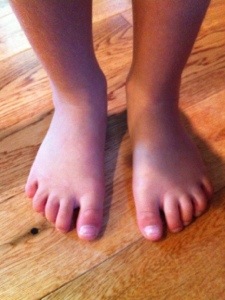
My 4yr old’s feet: excellent alignment and strong for her scooter, soccer, and the playground. The right footwear will ensure they look this way as she ages through the big game of life.

any pearls for the aging runner?

20120919-012247.jpg

Runner’s World asked for some key points to think about as we edge-up in years. It happens to all of us at some point right?

Check it out here

Disclaimer: the advice mentioned in this article is not meant to replace Botox

Anatomy for Runners – check out my book!

20120831-163101.jpg

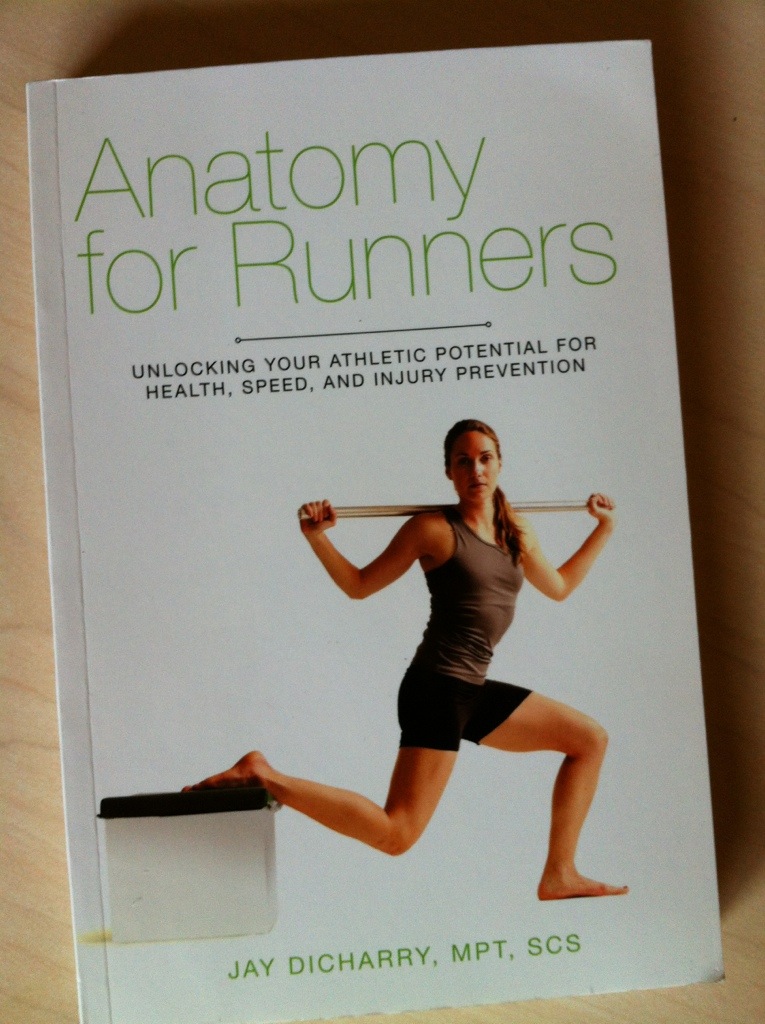
Well, the formal announcement is finally here, gang. I’m proud to announce my book “Anatomy for Runners: unlocking your athletic potential for health, speed, and injury prevention” is out now!

After many months of late nights and weekends, its available at your neighborhood bookstore, amazon, and even in some of your favorite local running stores (ask your shop to carry it if they don’t).  I’ve gotten some great feedback from the press and on blog-o-sphere, but if you enjoy it, please do post a review on amazon as well.

This book is designed to help runners help themselves. It teaches you what running does to your body, and how to keep the chassis strong as the engine grows stronger. It’s the answer to the questions you always asked, and to those you’ll have in the future. Most of all, its a tool to help you succeed. Because, I’m happiest if I don’t have to see you for help –> I want you out there having fun!

Yes, the book in the photo looks like its been read, because it has. This is not a coffee table book folks. I hope you enjoy it, because it was written for you! Happy reading and even happier running!


Do runners with a ball “get it” more than runners?

The media at large has done a dis-service to you, the consumer. They love polarizing images. They love the battle between overly built-up clodd-hopper motion control shoes vs. naked feet. They try to instantly declare one “better” than the other. The reality is that the barefooot buzz has been incredible for ALL athletes. No matter which side of this polarizing topic you stand on, it has directed attention on form. And that’s one of the main things really.

Let’s clear out the sewer lines folks. Barefoot is very DIFFERENT from running in shoes. Sure a good number of folks switch their contact style from rearfoot to forefoot when going barefoot, but a lot DON’T. And while the media loves to harp on this one single factor, its like saying only one tree in the entire forrest is important. And that’s just not true.

Its not so much forefooot vs rearfoot here, its more about where the foot is in relation to the body that counts. Striding too far in front of the body results in bad things. Your feet were meant to be beneath you – not flying out in front. Imagine running over ice. Anyone feel safe over-striding on ice? Didn’t think so……But its not just “runners” who are beginning to take notice. Other “running athletes” are asking question too.

Recently, I had a conversation with basketball journalist Steve McPherson. He was asking me about the apparent rise of injuries in basketball, and wanted to know if anything from all this barefoot hoopla translates over to the hoop. Steve did an excellent job with this piece, “What can the NBA learn from barefoot running?” I recommend you take a look, whether you run with barefeet, wrapped feet, or a ball.

20120531-174049.jpg

What can you learn from a frustrated bird?

Here at UVA, I teach a course called Neuro-muscular Basis of Human Movement, and today we are speaking of all things running mechanics. One of my students made an analogy that actually tells us a lot about running. Well, the analogy doesn’t really tell us that much, but a host of really angry and pissed off birds will….. Yes–> those angry birds!

Angry Birds is a simple game ( if it’s so simple, why has our country’s gross national product dropped since its launch????) that forces us to abide by the laws physics. Your goal, of course, is to knock out those smirky smiling pigs at various locations. You learn very quickly that aiming too high blasts your bird up to the clouds, at the expense of sacrificing distance. Aiming too low also compromises distance. Aiming just right produces the greatest distance covered with a pull of the slingshot….. The fancy name for this would be the optimum trajectory

While you don’t have to land on a pig when running, you do try to cover a given amount of distance per stride. In fact, the definition of running economy would be to cover a given distance with as little energy as possible. Too much up and down motion while running wastes a lot of energy. Actually about 80% of the energy required to run comes from raising and lowering the body against gravity. So “aiming too high”- too much vertical rise an fall- is not a smart move.

A lot of people get this. The problem is that they take it to the opposite extreme. They tell us that we need to minimize the rise and fall of our body. Does this play out? Go play angry birds again, and aim your bird dead flat. Pull back all the way and watch your bird take flight….. It won’t go very far. Limiting the up and down motion of the body when running not only ensures you won’t go far with each stride, it also costs a lot of energy! Go for a run and try to keep your head as still as possible- you won’t be able to do this for long- its tough!

So what is best? If you try to get maximum distance per fire on angry birds, you’ll find that about 45 degrees gives you the greatest distance. So does this mean that you should aim for this when running? Well, not exactly. The body isn’t a bird, a cannon ball, or any other type of projectile. It’s an actively controlled spring that actually stores and releases elastic energy to help you move forward. Some amount of vertical rise and fall is actually beneficial to “load the slingshot” and store and release this elastic energy. Exactly how much depends on your body weight, your leg length, and your pace, and your contact time. A sort of nice number is around 4-6 cm of vertical rise and fall of the body typically produces optimal results. In labs like ours at UVA, we study this kind of stuff to tweak your economy.

The take home message is that some rise and fall is necessary, even advantageous, when running.* So when someone tells you that a runner is efficient because their head stays perfectly still when running, maybe you should hand them your smartphone and tell them to play a little game.

* note- excessive rise and fall of your phone, as in when you throw it against the wall after not beating a level for the 37th time, isn’t recommended.

20120405-104247.jpg

South by SouthWest Festival: When Biomechanics Attack

Check out the report WIRED magazine did of my talk with ESPN writer Henry Abbott at SXSW music festival. Likely the only time I’ll get to say I presented at the same conference as Al Gore, Bruce Springsteen, Seth MacFarlane, Jay-Z, and Jeffery Tambor (unfortunately not on the same stage at the same time!)

Nice summary, except they didn’t really get one critical point across. You CAN improve your hip flexibility and your hip strength!

Check out the WIRED article here and check out this link I did for Runner’s World a while ago on improving hip mobility


Are you ready for minimal?

Looking to get into “less” shoe? Don’t understand why you need to make some changes in your body to help this process? Looking for some help moving towards something new? Check out this month’s issue of Running Times to check out an article I wrote with my colleague, Dr Mark Cucuzzella, on a smooth and successful transition to minimal running shoes.

And if you’d like to see the print word come to life, check out the video “are you ready for minimal” by yours truly on the www.runningtimes.com homepage. Also on their youtube channel here.

Anybody want to learn?

Running Medicine 2012: The Gait Debate

The longest “running” running-specific conference continues this march 23rd at the Omni Hotel in Charlottesville. We specifically cater to the needs of Physicians, Physical Therapists, and Athletic Trainers so you can keep your patients doing what they like to do best.

The past several years have seen lots of chatter: How should you run? What should you have on your feet? What’s best for everyone? How should you contact? What should your cadence be? How do differences in unique structure and control impact all the above?

Clinicians, wouldn’t it be nice to answer these questions with a little knowledge under your skull? Instead of beginning each answer with ” well I think….”

Our distinguished panel of experts will share what we know ( and don’t know!) about running, and how you can apply this knowledge to your patients.

Oh, and come fit- because you’ll get to run your fastest mile yet @ the McCormick Mile on Sat morning.

Please note that Saturday’s lab session is FULL, but come join us for some great presentations on Friday. More info at:
http://www.uvaendurosport.com/runmed