Tag Archives: injury

From General to Specific: thinking through your yearly training plan

OK. Gut check time. a few weeks ago, I asked you to take a look at your past, and identify your performance limiters.  While both “Type A” and “Type B” training plans can be incredibly successful, even the most open minded Type B person takes a step back to look at their needs. After all, you’ll never reach your goal without a road map to guide you along the way.

To help you organize your road map, I’d like you to keep in mind a general plan: “from general to specific.” What does this mean? Well, if you are a cyclist, the best, most specific way to train leading up to your competition season is to pedal your bike…..often! But if you are 4 months out from your season, there are about a million other things you could be doing besides biking, that will still help you pedal well come competition season.

There’s no substitute for working hard, but there’s also no reason to work hard at the same thing. I know some of you say, “sure – I do this. I lift weights in the offseason.” Well, if you know anything about modern training theory, weights, plyometrics, and drills aren’t just for the off season (another topic for another time). When I say general, I’m not talking about all this kind of stuff. I’m talking about other kinds of stuff.

When you are 4 months out from race day, your body doesn’t really care if you did 2 hours on the trainer, or 2 hours XC skiing out in the woods. But your brain just might be a whole lot happier shushing though the snow covered trees instead of watching another 15 yr old Spinervals video. If you feel like going to a rock gym – go for it. The balance, coordination, and muscle stabilization you gain from rock climbing will improve areas of your body you never existed. And so what if you aren’t good at it? You aren’t a professional rock climber, its just something fun to do while you’ve got time, and all-cycling-all-the-time isn’t the sole focus of your day.

Me? I’m tackling my nemesis…..trying to ride my unicycle. Previously, its been successful at tacking me instead. But this is all supposed to be fun right? We do this stuff for a challenge. Repeat after me: “It’s January.” You know your friend who is putting in 20 hr training weeks right about now? He’s in for a massive blow-up come about June, and will be spending the peak of race season burt out and destroyed. So expand your skills and expand your mind. This winter, what are you doing to work on your “general?”
Think backwards to go forwards

So its the second week of the new year. Did your 19 New Year’s resolutions you had planned make it through week #1? This time of year, we all get caught in a trap: “Im going to do more base training, more speed work, more intervals, more weights, sleep more, eat healthier….the list goes on and on. While it would be great to have the luxury of time to make us all into training animals, we have this thing called life that gets in the way sometimes. And then a lot of us become discouraged when things don’t work out the way we planned, and we don’t achieve “more” of everything we set out to. Instead of doing “more” in 2013, let’s ask a simple question to help you do “better” in 2013.

Hard questions = best answers

When I work with a patient or athlete, I always discuss THEIR goals for the upcoming season. There really isn’t any right answer here – it may be to make the Olympic Trials, simply to PR at your half marathon, or just be able to get to the point where you can train consistently – your goals are your goals. My job is just to help you achieve them. After you tell me your goals, I ask one simple, but humbling question:  “what’s the biggest thing that stood in the way of your goals the past season?”

Ouch. This is typically the point where eyes roll back in your head. Every day you hit snooze and didn’t get up to train is flashing before your eyes. Why you didn’t dig deep for a finishing kick in your last race becomes more painful now than it did when you got passed with 50 feet to go. However, this question is not meant to punish you, its to get the the root of the problem. You don’t drive to grandma’s house aimlessly, you have directions and a plan to get to your destination. Training is the same thing.

Think backwards form your previous season. What went well? What were the defining workouts for you? Were you rested properly going into big races? How was your pacing? Did you do a good job of timing your weight sessions in relation to the rest of your workweek? Was your total volume of training time realistic with everything else you have going on in life? Did you pick the right races? Did you start oyur intinse training at the right time of the season? Wish you would have done more basework in the off season? Wish you would have taken more time off in the off-season to avoid burnout? What things stand out that didn’t go well? Were your goals too ambitious given your current life situation? If so, can other things be altered to allow you to train appropriately? Did you have fun?

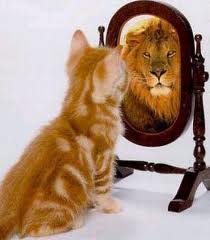
Image

Note: this image is for figurative purposes only. If you see a lion in the mirror, you should probably run away.

This simple question can help you identify important things that often get lost in the shuffle. If you want to improve as an athlete, you need to train. Period. But your training should be focused for you, and “more” training is rarely the answer. Everyone wants to have some voice come along and say “just do this and you’ll achieve what you desire” Well, if you are honest with yourself, you’ll find that voice is you. With your limiters in front of you, you can now focus on specific ways to attack it. Looking backwards helps define where we need to move forward in 2013.

Looking ahead to 2013

20130102-135706.jpgSo it’s the New Year. As a reader, you’ve seen every blog out there flaunt their “top posts for 2012!”   Well, since there are less than 50 posts on this blog, making a “top 10 posts” post is a little ridiculous.

For writers, wordpress sends us these snazzy year end reports to see how you are fairing in the e-world. And one thing is interesting in my summary. While the reader base is still growing, the most popular posts on this blog aren’t new. In fact some of the most popular content on here is from last year. This means that people are coming to this site as a reference for quality information. Or it could mean that the “tight pants” video I linked from Jimmy Fallon turned everyone off…..

In any case, I’m not going to discuss the past, because there’s a search engine for that. But looking forward, what’s planned for 2013? More help for you.

  • Expanded Focus on Athletic skill: My book has been embraced by runners, but its also been embraced by non-runners. Every athlete needs to know how to keep their chassis in tune as they train their engine. Well rounded athletes recover faster from training stress, better prevent injury, and slow the effects of aging on your body. Better foundation = better performance. And a lot of it is just plain fun!
  • More content on other sports: Guess what? No one knows everything. Looking at other sports can help you learn more about other training strategies and tricks that may help you. And if you are a cyclist or swimmer, you’re really going to be happy looking forward. And we are even going to discuss weights, strength, speed, and power. We are going to make you better.
  • Current information: I’m speaking at 10 different conferences between now and August. I believe that knowledge shouldn’t stay in the hands of the teacher. I’ll be looking to post relevant new findings being spread around the conference circuit to help us all enrich our exchange of information.

Video: A word is a word. A picture is apparently worth a thousand. Well, sometimes words and pictures still aren;t worth as much as seeing something in realtime. Expect to see more video content on here.

So it’s the New Year. As a reader, you’ve seen every blog out there flaunt their “top posts for 2012!” Well, since there are less than 50 posts on this blog, making a “top 10 posts” post is a little ridiculous. But wordpress sends out these snazzy year end reports to authors letting them know how they are doing. And one thing is interesting in my summary. The most popular posts on this blog aren’t new. In fact some of the most popular content on here is from last year. This means that people are coming to this site as a reference for quality information. Or it could mean that the “tight pants” video I linked from Jimmy Fallon recently turned everyone off…..

In any case, I’m not going to discuss the past, because there’s a search engine for that. But looking forward, what’s planned for 2013? More help for you.

  • Expanded Focus on Athletic skill: My book has been embraced by runners, but its also been embraced by non-runners. Every athlete needs to know how to keep their chassis in tune as they train their engine. Well rounded athletes recover faster from training stress, better prevent injury, and slow the effects of aging on your body. Better foundation = better performance. And a lot of it is just plain fun!
  • More content on other sports: Guess what? No one knows everything. Looking at other sports can help you learn more about other training strategies and tricks that may help you. And if you are a cyclist or swimmer, you’re really going to be happy looking forward. We are even going to discuss weights, strength, speed, and power. We are going to make you better.
  • Current information: I’m speaking at 10 different conferences between now and August. I believe that knowledge shouldn’t stay in the hands of the teacher. I’ll be looking to post relevant new findings being spread around the conference circuit to help us all enrich our exchange of information.
  • Video: A word is a word. A picture is apparently worth a thousand. Well, sometimes words and pictures still aren;t worth as much as seeing something in realtime. Expect to see more video content on here. Warning: hair and make-up budget is zero dollars.

Here’s to getting out of your rut, and exploring your world – Happy New Year!!!

Christmas gifts for the athlete you love (or yourself!)

So we are officially past one of the coolest days ever (12-12-12) and now 11 days away from when the man in the red suit flops down your chimney to bring joy to all the good little boys and girls. Those of you much better than I are likely done your Christmas shopping. But if you are like me, and still haven’t picked out any presents for your wife (or other person you care about), I’d like to offer a few suggestions. If someone you love is looking for an edge, wants to improve their skills, and is looking to blow their inner athlete wide open – then look no further……

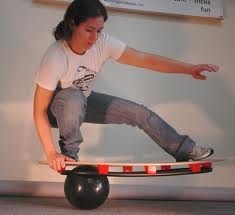
#1 – Rocker Board.
20121214-101308.jpgYou’ll notice a common theme here. All of the tools (toys) listed here are designed to help you improve balance and proprioception. These skills carry over in spades to all your athletic persuits: running, cycling, skiing, surfing, climbing, kiteboarding, football, basketball, tennis,  and possibly even bowling. Rocker boards are a great tool to teach you how to stabilize your foot and ankle. Hard unstable surfaces provide an optimal training environment to improve you. You should look for a board that only rocks in one direction (thus the name rocker board). Many folks also make boards that wobble and spin in all directions (called wobble boards). Both have their place, but when it comes to training the foot and lower leg, I’m a big fan of the former. These are sold in many places. If you are looking for suggestions, I typically direct people over to sportssmith.net because they have the cheapest one I’ve found: $29.99.

#2: Surfing in your living room – meet the Si-Board.

20121214-101324.jpgSo you’ve mastered basic balance skills, and are looking to quite possibly have as much fun as possible while under your roof? Look no further than the Si-Board. Sure the Indo Board is cool, but this thing is in a class by itself. I have one and absolutely love it. Its so much fun! Its not one of those things you’ll say “oh I have to make time to work on my balance……” Its so engaging that you may find yourself taking time away from other things! Your feet and hip stabilizers will get a workout like nothing else. They are pretty $$$$. I bought the DIY creator kit for cheap, and in 45 min was “surfing” in my living room.  In my mind, if you are an athlete, you should have one of these. Period.

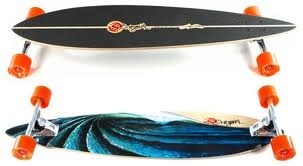
#3: Surfing down the pavement –> Longboard.

20121214-101339.jpgPresents are all about fun right? Buying a long board was one of the best decisions I made. Its not like hucking off the loading docks like we all did when we were 12. This is all about the flow. It’s great to carve slalom turns down the hill – almost as much fun as skiing or snowboarding. And once you learn to “pump it” you can fly. I can roll miles down the road without pushing at all. I guess some people might say its a great workout, but its so much fun I’d do it even if balance skills didn’t translate into other sports. What board to get? wow – there are hundreds of options out there. Personally, I’ve got a Original Pintail 40. I bought it because it has springs instead of bushings. This makes it easy to rail turns at low speed and a bit tougher to control at high speeds, but lets’ face it: Most of us aren’t looking to hit 50 mph down a mountain while slamming a RedBull.  Only warning I’d offer is this: you may find yourself longboarding more and doing your typical sport a bit less!

#4: a book? Maybe a book called Anatomy for Runners! Its by far the cheapest thing on this list, and quite possibly the most valuable. I’ve spent many years of my life teaching. I’ve taught at UVA and continue to teach around the US. You’ll be surprised what people are capable of when you give them the knowledge to succeed. That was the goal behind my book. Its a way to give you information to help you hit your goals this season and beyond. Sure its slanted towards runners, but about 80% of the information in there applies to other endurance and strength and power sports as well.

If you are looking at the equipment above and thinking “that’s a bit high level for me-  no way”……let’s put something out there. Blowing past your comfort zone is the only way you’ll ever make jumps to the next level in your performance. And yes, I’ve put “old folks” on these with tons of success. Sure you should be careful when you are learning, but I will caution you that liberal use of #2 and 3 above just might result in fun!

Disclaimer for the people who think I’m funding my retirement with these recommendations. I personally bought the Si-board starter kit and my Original Longboard (in fact I bought a second one too!), and my clinic purchased the rocker board form Sports Smith. These folks have no idea that I am writing this, and I’m getting absolutely nothing in return.

Well, with the legal mumbo jumbo out of the way, Happy Shopping, and Happy Holidaze!!!

And if you’d like to re-live a little Christmas story from last year, check out how Climate change is impacting reindeer training. 

How should your foot land when you run?

Foot strike: your cross country coach from 1972 told you to always roll through from heel to toe. the barefoot zealots tell us we should always land on the forefoot. And several other schools of though tell us something else: to land on our midfoot.

Measuring all this stuff in the biomechanics lab has taught me a lot. Foot strike is but one of many variables that are worth looking at, but not the only one worth looking at. Additionally, people often strike different than they think they do. Lastly, Pete Larson found that there isn’t much of a difference in foot strike patterns and running times.

Foot strike is more of an effect of many things related to your form, rather than the overiding factor that governs your form. And if you’d like to see more, check out what Pete Larson and I said to Competitor Magazine.

Class in session! Upcoming Talks for Runners, Coaches, and Clinicians

20121129-171808.jpgOne of my favorite things is teaching. Sure I like the human body and what its capable of, but more importantly, I like the challenge of trying to teach average-Joe runner, their college coach, and their physicians and therapists. Each of these groups has a different education, different background, and different expectations, but they all want to learn to be better. Its my hope that I can offer some specific help to all of them.

I went to a class on teaching once, and learned a thing or 5000 about how we absorb and interpret information. To really enable someone to learn, you had to challenge the student to the point that their previous thought process is shattered. By poking holes in what we think, and replacing them with what we know, your and frame of understanding is shifted forever. Its my job to get you to think critically, so that you can think for yourself.

Since I get lots of people asking when my next talk is, I thought I’d share a few upcoming events in case folks were interested. Always good to cram more stuff in you brain.

Wed Dec 5th, 2013: The Running Event in Austin, TX – the annual conference for the Independent Running Retailer Association. Saucony is gracious enough to bring me in to discuss the mechanics of running. The more your local running retail staff knows about running the more they’ll be able to help you. I’ll also be doing book signings if anyone needs stocking stuffer.

Jan 20-21st, 2013: The Speed Summit in Morristown, NJ, an official USATF Level 3 Coaching Education Seminar. Want to save a few bucks? During checkout, type in “Dicharry” in the code box and you’ll save $10. Also if you print out the form and mail it in, you’ll also save an extra $9 dollar processing fee. I’ll be giving two talks: “How to prepare the body for optimal speed and strength training” and “How to screen for zebras in a field of horses.” But enough about me though….there are some major heavy hitters speaking. I’m really looking forward to this event.

Feb 23rd-24th, 2013: The Running Summit in Costa Mesa, CA, an official USATF Level 3 Coaching Education Seminar. And if you decide to attend, type in “Jay” in the code box during your checkout and you’ll save $10 dollars. An impressive weekend of discussion from some of the country’s most prominent coaches. As for me, I’ll be giving two talks: “Stretching, Strengthening, and Screening: Answers to questions to help your runners run” and “How shoes impact your form and how your form impact your shoes”

March 8-9th, 2013: The 10th Annual UVA Running Medicine Conference: From the Lab to the Clinic. This one really is near and dear to me. This started as a vision a decade ago when Founding-board members Dr. Robert Wilder, Eric Magrum, and myself came together to see what would happen if we had the first running-only medical education conference. Well, what began with 50 people mushroomed to over 240 of the most passionate running-specific healthcare providers in North America gathering to discuss better care for their patients. Its our 10th year! Thanks to all of you for your support over the years as we aim to give you the best experience possible. I’ll present “What to expect when you’re expecting: how clinical lab measures translate to gait.” But don’t come just for my talk! We’ve got a host of talented presenters, including the one and only Dr. Rodger Kram from CU-Boulder. Whenever I get some great brainwave creep into my head that I think is new, I’ll research it and sure enough, Dr Kram already found it out years ago. He’s brilliant and an amazing presenter that we are luck to have. And yes -there is a lab session yet again on Saturday and space is limited. Check out the link for full content.

April 19th and 20th: Care for the Injured Cyclist in Ann Arbor, MI. Yes, time to switch gears – literally. We’ll delve into the finer points of bike fit from both the performance and injury aspect, discuss how cycling contributes to chronic problems, and cover novel ways to improve on-the-bike stabilization and technique drills for efficiency. Don’t have the reg link for this one yet, but I’ll post it when I do.

Whew. that’s a lot for now. And somewhere in here, I need to fit in a ski trip!

Hope to see you in class.

Want a free copy of my book? School’s in session at a local running retailer.

There is a store called “Daddy Ultra Runs” down in Cocoa Beach, FL, and the owner, Hernan Garcia, is giving away my book with every shoe purchase from October through December…..at his own expense. Is this crazy? I don’t even know this guy. Why would a shop owner do something like this?

Let’s look at the reality here. 82% of runners sustain a running injury during their lifetime. Stats show that 42-62% of runners get hurt each and every year. Those numbers aren’t good! In fact some people would look at those numbers and say “running is dangerous – stay away!”

However, my experience treating runners daily for over a decade, and collecting objective information on their running stride in my lab has shown me that running isn’t really the problem. The problem has more to do with a) your body, or b) the way in which you run. While I spend my “day job” doing individual running assessments in my lab, I realize that I can’t see everyone, which is why I wrote the book, Anatomy for Runners. While its no substitute for a full one-on-one evaluation, its the best I can do until I’m able to successfully clone myself.

Let’s be honest, Your local running retailer is the first point of contact for runners. They see way more runners in a day than any local clinician does, and can take advantage of their exposure as educators. They can spread better information to both new and experienced runners, and together, we can work collectively to change those injury stats, and keep you running healthy into the future.

Thanks Hernan, and thanks to all of you who are spreading the word on the book!

any pearls for the aging runner?

20120919-012247.jpg

Runner’s World asked for some key points to think about as we edge-up in years. It happens to all of us at some point right?

Check it out here

Disclaimer: the advice mentioned in this article is not meant to replace Botox

Do runners with a ball “get it” more than runners?

The media at large has done a dis-service to you, the consumer. They love polarizing images. They love the battle between overly built-up clodd-hopper motion control shoes vs. naked feet. They try to instantly declare one “better” than the other. The reality is that the barefooot buzz has been incredible for ALL athletes. No matter which side of this polarizing topic you stand on, it has directed attention on form. And that’s one of the main things really.

Let’s clear out the sewer lines folks. Barefoot is very DIFFERENT from running in shoes. Sure a good number of folks switch their contact style from rearfoot to forefoot when going barefoot, but a lot DON’T. And while the media loves to harp on this one single factor, its like saying only one tree in the entire forrest is important. And that’s just not true.

Its not so much forefooot vs rearfoot here, its more about where the foot is in relation to the body that counts. Striding too far in front of the body results in bad things. Your feet were meant to be beneath you – not flying out in front. Imagine running over ice. Anyone feel safe over-striding on ice? Didn’t think so……But its not just “runners” who are beginning to take notice. Other “running athletes” are asking question too.

Recently, I had a conversation with basketball journalist Steve McPherson. He was asking me about the apparent rise of injuries in basketball, and wanted to know if anything from all this barefoot hoopla translates over to the hoop. Steve did an excellent job with this piece, “What can the NBA learn from barefoot running?” I recommend you take a look, whether you run with barefeet, wrapped feet, or a ball.

20120531-174049.jpg

What can you learn from a frustrated bird?

Here at UVA, I teach a course called Neuro-muscular Basis of Human Movement, and today we are speaking of all things running mechanics. One of my students made an analogy that actually tells us a lot about running. Well, the analogy doesn’t really tell us that much, but a host of really angry and pissed off birds will….. Yes–> those angry birds!

Angry Birds is a simple game ( if it’s so simple, why has our country’s gross national product dropped since its launch????) that forces us to abide by the laws physics. Your goal, of course, is to knock out those smirky smiling pigs at various locations. You learn very quickly that aiming too high blasts your bird up to the clouds, at the expense of sacrificing distance. Aiming too low also compromises distance. Aiming just right produces the greatest distance covered with a pull of the slingshot….. The fancy name for this would be the optimum trajectory

While you don’t have to land on a pig when running, you do try to cover a given amount of distance per stride. In fact, the definition of running economy would be to cover a given distance with as little energy as possible. Too much up and down motion while running wastes a lot of energy. Actually about 80% of the energy required to run comes from raising and lowering the body against gravity. So “aiming too high”- too much vertical rise an fall- is not a smart move.

A lot of people get this. The problem is that they take it to the opposite extreme. They tell us that we need to minimize the rise and fall of our body. Does this play out? Go play angry birds again, and aim your bird dead flat. Pull back all the way and watch your bird take flight….. It won’t go very far. Limiting the up and down motion of the body when running not only ensures you won’t go far with each stride, it also costs a lot of energy! Go for a run and try to keep your head as still as possible- you won’t be able to do this for long- its tough!

So what is best? If you try to get maximum distance per fire on angry birds, you’ll find that about 45 degrees gives you the greatest distance. So does this mean that you should aim for this when running? Well, not exactly. The body isn’t a bird, a cannon ball, or any other type of projectile. It’s an actively controlled spring that actually stores and releases elastic energy to help you move forward. Some amount of vertical rise and fall is actually beneficial to “load the slingshot” and store and release this elastic energy. Exactly how much depends on your body weight, your leg length, and your pace, and your contact time. A sort of nice number is around 4-6 cm of vertical rise and fall of the body typically produces optimal results. In labs like ours at UVA, we study this kind of stuff to tweak your economy.

The take home message is that some rise and fall is necessary, even advantageous, when running.* So when someone tells you that a runner is efficient because their head stays perfectly still when running, maybe you should hand them your smartphone and tell them to play a little game.

* note- excessive rise and fall of your phone, as in when you throw it against the wall after not beating a level for the 37th time, isn’t recommended.

20120405-104247.jpg