Tag Archives: injury

They said I’ve got pronation….How long do I have doc?

So you went to the “insert giant athletic store here”, and the 16 yr old kid who works part time for the summer, who is the “expert” on running watches you for about 30 seconds, and decides to tell you that you in fact, pronate. Or worse…..maybe you even over-pronate. Never fear though, they say! They’ll just go in the back and grab some of those big mutha shoes to totally stop you from pronating and be your personal savior.

Before you plunk down your hard earned cash, we should probably come to terms with a few things.

  1. What is pronation?
  2. When does it occur?
  3. Can you stop it, or should you stop it?
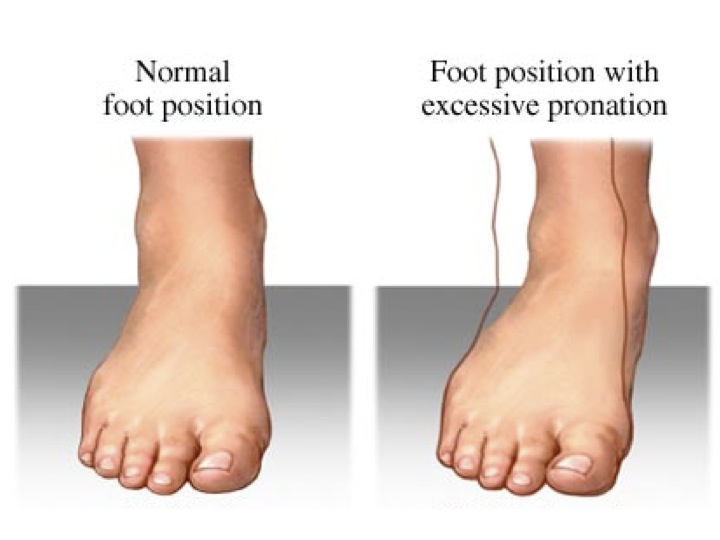
1 – First, let’s re-cap what this pronation stuff is all about. Pronation is not bad; in fact, it’s the body’s natural shock absorption mechanism. When the foot moves into pronation, it becomes like a loose bag of bones. Everyone pronates to some extent. Some more than others.  If you didn’t pronate, you’d have problems with- you guessed it- shock absorption. The opposite of pronation is supination. In supination the bones of the foot become more congruent (increased contact between the surfaces of the joints). This increased contact produces a rigid lever for push off in gait. So we should land in a supinated position, and move to a more pronated position during stance to decrease shock, and then move to a supinated position to achieve a rigid lever for push off.

Let’s re-cap this again using America’s favorite national pastime, Tetris. When the pieces fall from the top of the screen, we can move them about and rotate them freely. They can move. This is how the 26 bones in your foot function in the shock absorption or pronation phase. They should move about to dissipate force. Now imagine those same Tetris pieces once you’ve placed them in the stack. They can’t move right? They become congruent and are locked in place. This is similar to the foot when you are in supination.

2- Now that we understand pronation as something that is not really bad; let’s talk about when it occurs. As evidenced in a study carried out in our lab and published in the Journal of Orthopedic and Sports Physical Therapy, maximum pronation of the foot occurs after the heel has left the ground. Why does this matter?  Remember that 16 yr old kid? He’s going to grab a shoe off the rack that is a motion control shoe –designed or should I say marketed, to stop pronation.  A shoe like this features a higher density material on the inside of the shoe. The claim is that this different density material acts to stop the pronation from taking place, thus fixing your issues. If you’d like to see if your shoe has this, just look at the inner side of the midsole (marsh mellow stuff between the fabric upper and tread). If some of the inside of the shoe is a darker color than the rest, it’s likely a “dual density midsole design”.

OK – so let’s get back to timing of pronation. Shoe companies put this increased density material to “stop the foot from pronating”. Well, we found out that maximum pronation occurs after the heel is off of the ground. So guess what? – All that higher density material in the shoe isn’t even touching the ground to try and stop the foot from moving at the time when the foot is moving the most! Hmmmmm……makes you think doesn’t it?

3- We know what pronation is, and when it occurs, and now we should address the question of stopping pronation. Pronation is necessary. I’ll even say in the right amounts and at the right time, its good. I’ve seen PLENTY of runners who have problems because they don’t pronate enough. However, stopping pronation isn’t really in our best interests. It’s better to learn to stabilize the amount of pronation. The thing is that no shoe can do this- you need to learn to use the muscles in the foot and the muscles in the hip to stabilize the rotational motion that naturally occurs in your legs. Can you do this? How good are you at stabilizing your pronation? A visit to the SPEED Clinic can help you pin point your issues and fix them for good.

Parting thought –please don’t read this and think that we are saying that shoes don’t make a difference. They do. The objective research we do combined with our clinical experience has proven to us that they make a huge difference. We view footwear as part of an intervention to help you perform at your best. Shoes are very different. How much of a shoe you need, or weather you even need a shoe at all (barefoot running anyone?) are all part of a comprehensive assessment here at the University of Virginia.

Adjust your thermostat, adjust your expectations

Wow. If you are on the east coast like we are, we don’t have to tell anyone that its been H.O.T.
“But wait……..don’t the weather gods know I supposed to be training for the ___ championship in __weeks ….not to mention the ___ race I’m doing this winter. My workout today was slow, and I felt bad on my long workout this weekend. I’m getting slower and this heat is killing my training!!!!!”
If you guys want some tips on running in the heat, there are some great words of wisdom on this blog if you scroll down. Let’s re-cap: – hydrate, run in the morning, hydrate, loose fitting and light colored clothing, and hydrate. OK fine – but lets get real on this summer’s weather and why we need to take it into consideration.
Last year in C’ville, we had 7 days above 90 degrees and they were scattered about the summer. Except for a small 2 week heat wave in the middle of the summer, it wasn’t all that hot all the time. You had the luxury of moving workouts a day or 2 ahead or behind in the week based on the heat. This summer, we’ve had 45 days above 90 degrees. We’ve had 7 above 100. And let’s be honest, its not really cooling off all that much at PM or in the AM (Friday night was 96 degrees at 9:00 PM!). Its been so hot that all outdoor high school and collegiate practices would be completely cancelled in weather like this. National and State sports governing bodies have established these regulations to protect the athletes. I know – you are tougher than them and need to get your speed work session in today though…….stay with me.
Dealing with this heat is all about adjusting your expectations. Let’s  re-state this point to be absolutely clear: Trying to train at your same intensity and volume (or increasing it) in this type of weather is NOT a smart thing.

If you don’t agree with me, let’s look at it from your body’s perspective. When you exercise, you ask your body to metabolize fuel stores, regulate energy balance, and produce mechanical work so that you can move from point A to point B. All this effort produces heat. Your body has a lot of internal mechanisms to regulate body temperature, and they work pretty well. But your body has limits as to how rapidly it can cool itself off. Did you know that your body actually begins to compromise its ability to perform at around 72 degrees? Now think about how much challenge a 95 degrees environment places on that body.

Still not convinced? Let’s say that your typical Wednesday morning track work out is 12x 90 second 400 repeats, with 45 seconds between each. Think about how much stress that places on the body under normal conditions. Now let’s consider our weather reality. Its now 10-15 degrees hotter than usual and more humid. Trying to run that same workout under these conditions is significantly more stressful than typical. You may notice that you can’t make the 90 second split without taking more rest between reps. You may even notice that under these conditions, 90 seconds is not even possible. Let’s say that your triathlon training schedule has you doing a 5 hr ride on Sunday AM. However, the heat has slowed your pace down significantly after 2.5 hrs, and all you want to do is jump off the bike into a cool pool. Its OK to back off the workload to match the change in conditions – you’ll STILL GET THE BENEFIT OF THE WORKOUT. Shorten the ride. Increase your rest. Take longer breaks between intervals. Do whatever it takes to be consistent with your training, but realize that extreme weather requires some modifications to ensure we aren’t just pounding ourselves into the ground. Remember- you’re body doesn’t really know exactly how fast its going or how long a rest you are taking; it just knows that you are pushing it harder than you have in the past and with all this heat, it just might push back.

This post is written in memory of a local high school runner who died of heat illness during a summer training run.


Deep Thoughts: Do your muscles really have a memory?

You can run quarters on the track in 80 seconds. Maybe you can even do them in 60 seconds. Maybe you hit a PR for sustained power on the bike. You can drive your golf ball 250 yards down the fairway. Does this mean you are really performing at your potential?

Every time we practice a movement, we are reinforcing a particular movement in our brain. This is commonly referred to as “muscle memory”. Training technique is an often overlooked aspect in endurance world. Each joint in your body has an axis around which it moves, with muscles controlling the movement. These tissues are engineered to move a specific way. If we learn good muscle memory, we continually re-enforce good habits – and come competition day – we perform at our potential.

Competition to you might be a round of golf with friends on Sunday or qualifying for the 10,000 meter at the Olympics. At every level, focusing on your form can improve your performance.  Our body and mind strive to get the job done – at all costs. Often, this can mean we learn an incorrect strategy to get the job done. And even if your form is better than most, we all suffer form alterations when we fatigue. When these form changes occur, we have a decrease in efficiency. Since we are performing “different” than we normally do, we put more strain through our body’s tissues and are more likely to become injured. Understanding the stages of motor learning will shed some light on why we need to work on our form in the first place:

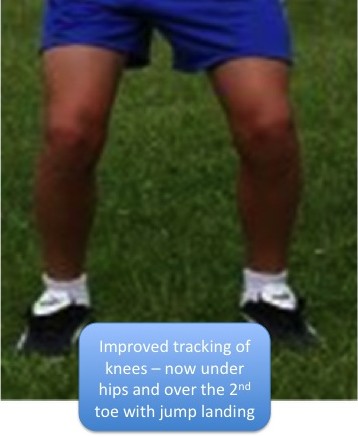
  1. Unconscious Incompetence – this means we have no idea that we are doing something with incorrect form. Most of us fall in this category. Look at the picture of the woman landing from a jump. The joints of the lower body are designed so that the knee tracks over the second toe when we land from a jump. The goal is to preserve proper alignment when we move. This athlete has no idea that her knees crashing to the inside are a problem. She doesn’t know that it significantly increases her risk for an ACL tear, patellofemoral syndrome, hip impingement, or a host of other issues. She doesn’t know that this landing technique will hurt her running, jumping, and cutting performance.
  2. Conscious Incompetence – We reviewed this athlete’s form issues with her. We showed her that the jump landing technique she uses can lead to injury and compromises her performance. She is now aware of it and understands the issue. This is the point where specific corrective exercises, cues, and drills are prescribed to her to correct this muscle memory. The more she practices these correctly, the more she re-enforces correct motion – however this stage requires a lot of conscious thought to perform the movement correctly . Because of the increased cognition or thought that this stage requires, the athlete may in fact be less efficient at their particular sport because they are “thinking” so much about the way in which they move. This is why drills often seem challenging.
  3. Conscious Competence – The athlete understands that there was an issue, knows correct technique, and now is able to perform correctly without thinking about it. She has removed the stresses from a flawed technique, and can perform correctly in sports-specific drills and in competition. The is the stage we want to be at! Think about some of the best performances you’ve ever done. What were you thinking about? Most successful athletes can’t even remember what they were focusing on. They were in “the zone” and just let their bodies perform using the skills they learned through a lot of practice.

In our quest to improve, we often focus on adding intensity or training volume thinking it to be the magic fix to take us to the next level. We’ve often heard the phrase “train smarter, not harder.” Adding time and focus to alter your technique pays off in spades. So let’s expand that saying to “move smarter, not harder”. The focus of the biomechanical analysis done in the SPEED Clinic @ the UVA Center for Endurance Sport is identify your unique compensations and make those muscles smarter!

Principles of Injury Rehab

There are over 30 million active runners in this country. Fueled by the ever growing participation in marathons and half-marathons, the group keeps growing! Most runners will at some time experience an injury severe enough to cause them to miss a week or more of training. Fortunately for runners, most of these injuries will indeed heal. An understanding of the causes of running injuries and basic treatment principles will hasten healing and return to training.

The majority of running injuries are related to overuse. We do too much, too fast, too soon. Most injuries occur during a transition period-a period where our training is undergoing some type of change. Common examples include increasing mileage too quickly, changing intensity of training, such as moving from a base/distance phase to a strength or speed phase, changing the surface one trains on, or even changing the type of running shoes. Rarely do I see injuries in folks who train very consistently, unless they are in the middle of a transition phase. The transition, rather than the absolute amount of training, seems to be liked closely to injury.

A number of predisposing factors to overuse injuries have been identified. Intrinsic risk factors are anatomic/physiologic factors inherent to the runner. Depending on the particular injury, potential factors may include muscle weakness or imbalance, inflexibility, a leg length inequality, or feet that are excessively high arched or flat.

Extrinsic factors are non-anatomic. Included here are primarily training errors and equipment. For the runner this is the too much, too soon, too fast part. Since most running shoes are meant to last about 400 miles, I see a lot of runners in the office who are ready for a new pair!

Addressing these intrinsic and extrinsic risk factors in addition to treating the specific injury itself will help ensure that one keeps running long after the presenting injury has resolved. Certain principles form the core of running injury rehabilitation:

1. Establish correct and specific diagnosis. Know what you are treating. Plantar fasciitis and calcaneal stress fractures both present with heel pain. The treatment plans and the amount of training one may do, however, varies greatly. Runner’s Knee refers to a specific condition related to abnormal motion of the patella (knee cap). Runner’s knee, however, is only one of many causes of knee pain in runners, each requiring different approaches to treatment. Having a specific treatment plan directed at correcting the specific problem will guarantee best success.

2. Control pain and inflammation. Although inflammation is usually only one component of a running injury, its presence often leads to pain and prevents progress in rehabilitation. Common measures include:

Ice: 10-15 minutes 3 times a day. No ice water buckets which can cause frostbite. I’m often asked which is best, ice or heat? In any injury in which there is active swelling or early on, the first few days after the onset of pain, ice is best. In the absence of swelling, after a few days either ice or heat can be helpful, whichever seems to help most.

Medications: Aspirin or antiinflammatories can be helpful for a short period of time. Certain caution should be used, however. If you are allergic to aspirin or an anti-inflammatory, are pregnant, or have had problems with ulcers, kidney, or liver disease, you should not take antiinflammatories. If you take antinflammatories for 2 weeks and still have symptoms, it’s time to call your doctor. In some instances steroids, either tablets or by injection will be indicated. Remember, however, that steroids function only as an antiiflammatory and shouldn’t be viewed as a magic bullet. They are only part of a more comprehensive rehab program. Also, since injected steroids can potentially weaken the local soft tissues, I recommend not running for 10-14 days following an injection.

Modalities: Athletic Trainers and Physical Therapists can apply certain modalities which are helpful in controlling pain and inflammation. Examples include electric stim, ultrasound, iontophoresis (using an electric stimulator to deliver anti-inflammatory medication) and phonophoresis (using ultrasound to deliver anti-inflammatory medication). Compress/elevate: If a joint is visually swollen (such as following a twisted ankle), wear a compressive wrap or sleeve. Elevate the limb on a stool when sitting.

3. Promotion of healing. This is where rehabilitative exercises come in. Flexibility, strength, proprioception/balance and functional drills are all important. More than anything else the athletic trainer or physical therapist does for us, these are the key. Rehabilitative exercises should not be thought of as just reinforcing strength and flexibility. The focal exercise also enhances blood flow and stimulates tissue remodeling. So, even the strongest and most limber of us will benefit from rehabilitative exercises. And remember-they only work if we do them! When injured, plan to spend 20 minutes a day on rehabilitative exercise in addition to any other training we are doing.

4. Control abuse. This means correcting the factors that lead to the injury in the first place. Look over your training and see if there is any factor that has recently changed, such as an increase in mileage, or the addition of strength or speed work. Talk to your coach to see if perhaps this transition can be made more gradually. Have your started running different courses? The addition of hills or trail running have been linked to various running injuries. Braces, straps, and orthotic devices, when properly used, will minimize overload to affected structures. And be sure that your shoes aren’t overdone. 400 miles max-then they become kick around shoes.

5. Fitness and conditioning. General fitness enhances local blood flow which aids in tissue healing. It also helps prevent deconditioning including areas that aren’t even injured. Certain injuries (ie sciatica or stress fractures) require rest from running. For most running injuries, one can usually continue at least some level of running. Supplement what you miss from running by adding time cross training. Cross training may also be an option for those who can’t run at all, but be sure to clear this with your doctor. Good options include deep water running, the elliptical machine or the bike. Try to simulate what you would normally be doing on land, whether it be short repeat intervals, tempo sessions or long aerobic distance training.

6. Return to sport. With most running injuries, runners can usually continue to least a modified schedule of running with symptoms dictating rate progression back to full training. When in doubt, be sure to discuss your running plan with your physician and trainer. Certain injuries (ie stress fractures) require a certain amount of time to heal even after we no longer have symptoms. Plan to continue the rehabilitative exercises for several weeks after return to training to ensure correction of the risk factors that may have led to injury.

Some additional practical guidelines:

When returning to running after more than a month off, start with a walking, then walk-jog (walk a minute, jog a minute repeats), then run program.

Increase mileage by no more than 10% per week. The longest run should not increase more than 2 miles in any given week. One’s long run should usually not exceed 30% of one’s total weekly mileage. One exception: First time marathoners participating in a lower mileage program. Remember, however, that this amounts to a big progression, so avoid temptation to exceed one’s program in other areas.

Change shoes every 400 miles and be fitted by someone familiar with running shoes and gait styles. The shoe your training partner loves may not be ideal for you.

When running with an injury be sure not to exceed the “Relative Activity Modification Guidelines”:

1. You may run with mild pain (0-3/10). If you have moderate pain (4-6/10), back things down until the pain is no more than mild. If you have severe pain (7-10/10), stop running!

2. Discomfort that is present at the beginning of a run, but resolves after easing into the run is usually associated with mild injury. If you know that symptoms will worsen beyond a certain pint (mileage or pace), you have defined your limit. Do not go beyond this point.

3. No limping allowed! Sounds like a no brainer, but folks violate this all the time. One should not run with an injury that forces a change in normal gait. The flip side is that if you are able to run with a normal gait and the discomfort is no more than mild, the likelihood that healing is prolonged is minimal.

Remember-with certain injuries (ie sciatica, stress fractures) we simply should not run. When in doubt, consult your physician for specific guidelines.

Following these principles should ensure most complete healing and a safe return to training.

See you on the roads!